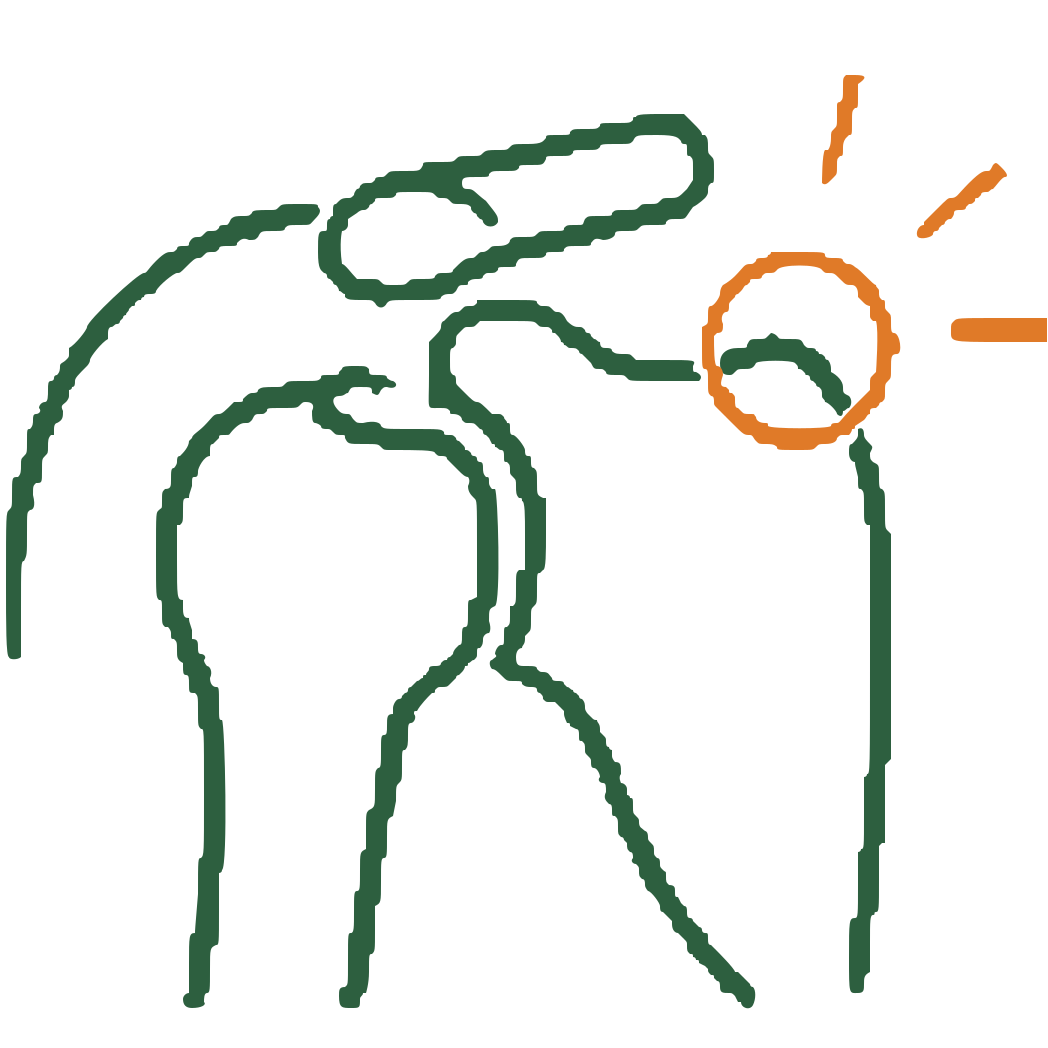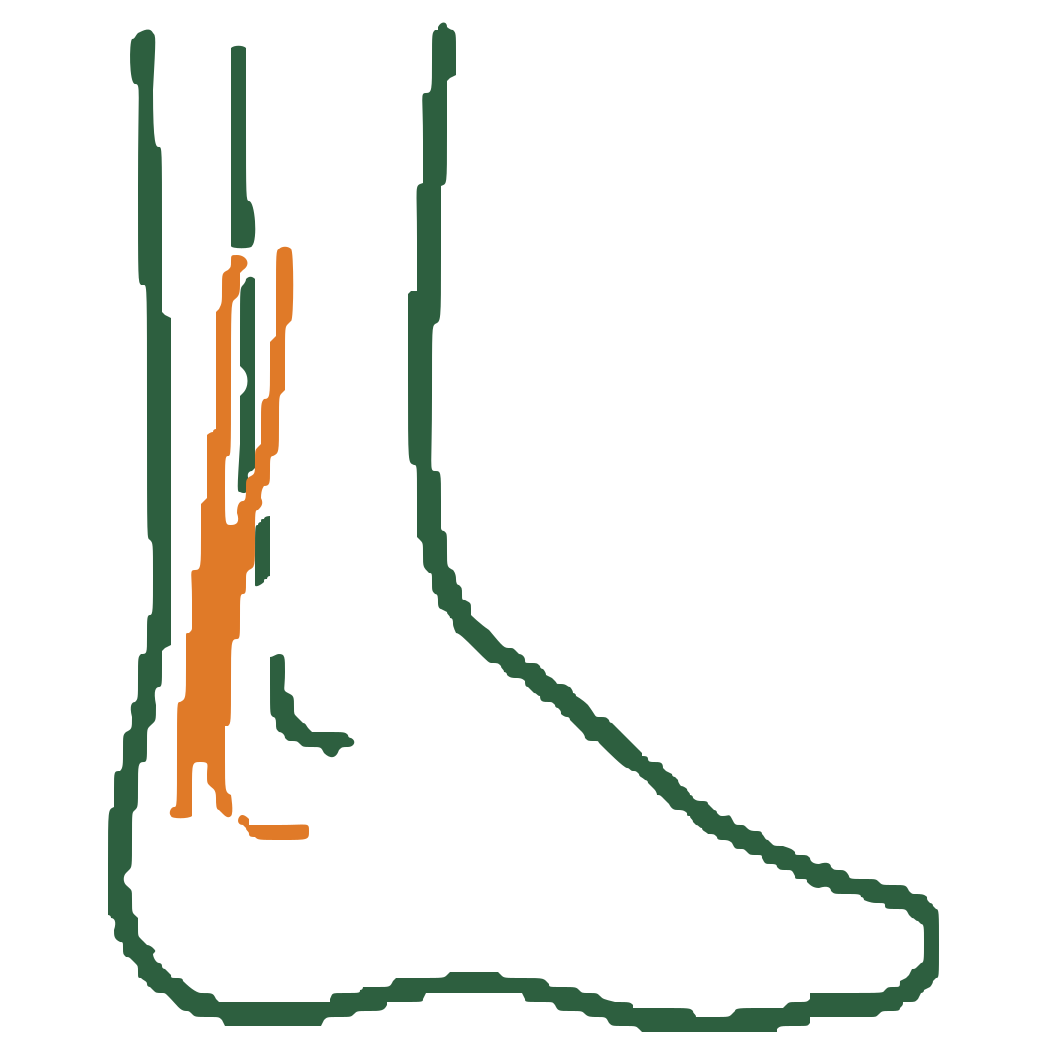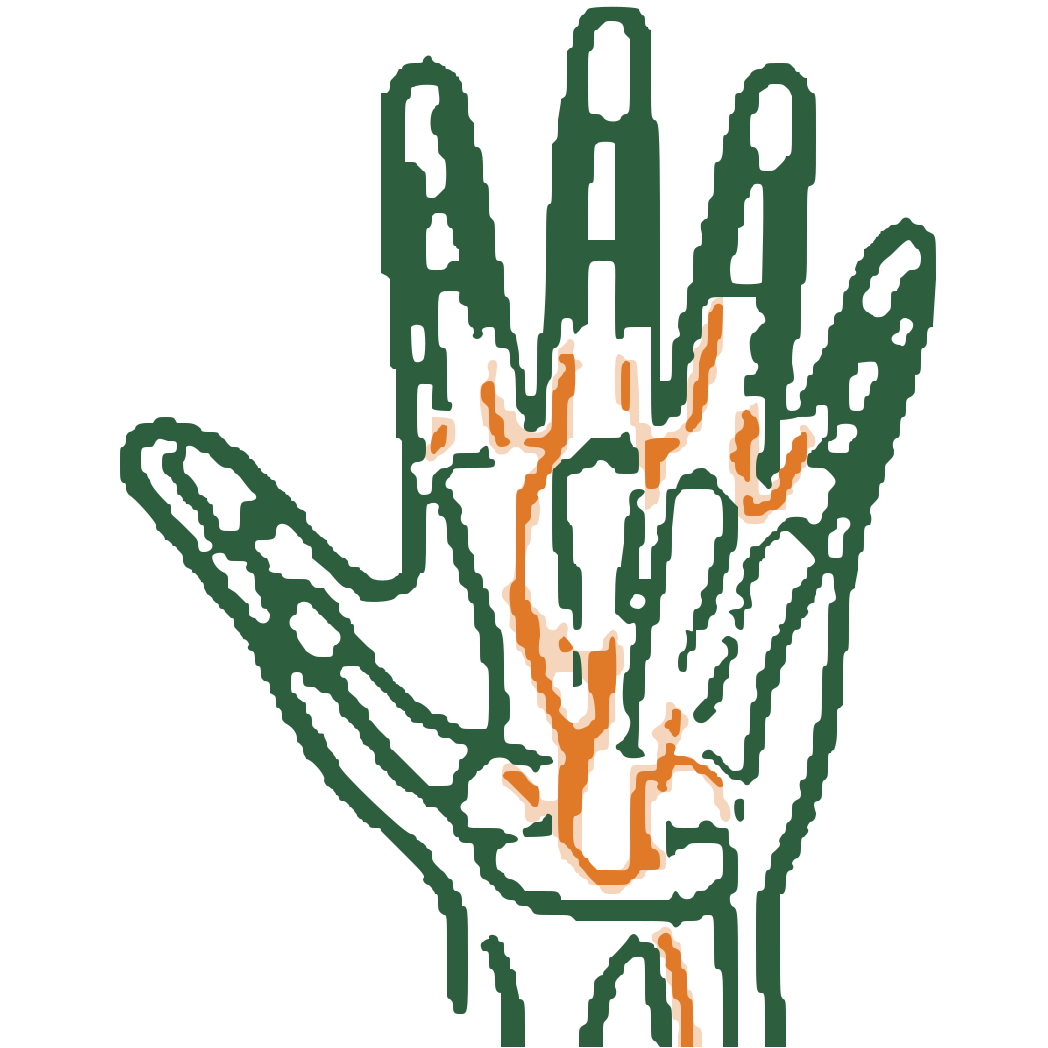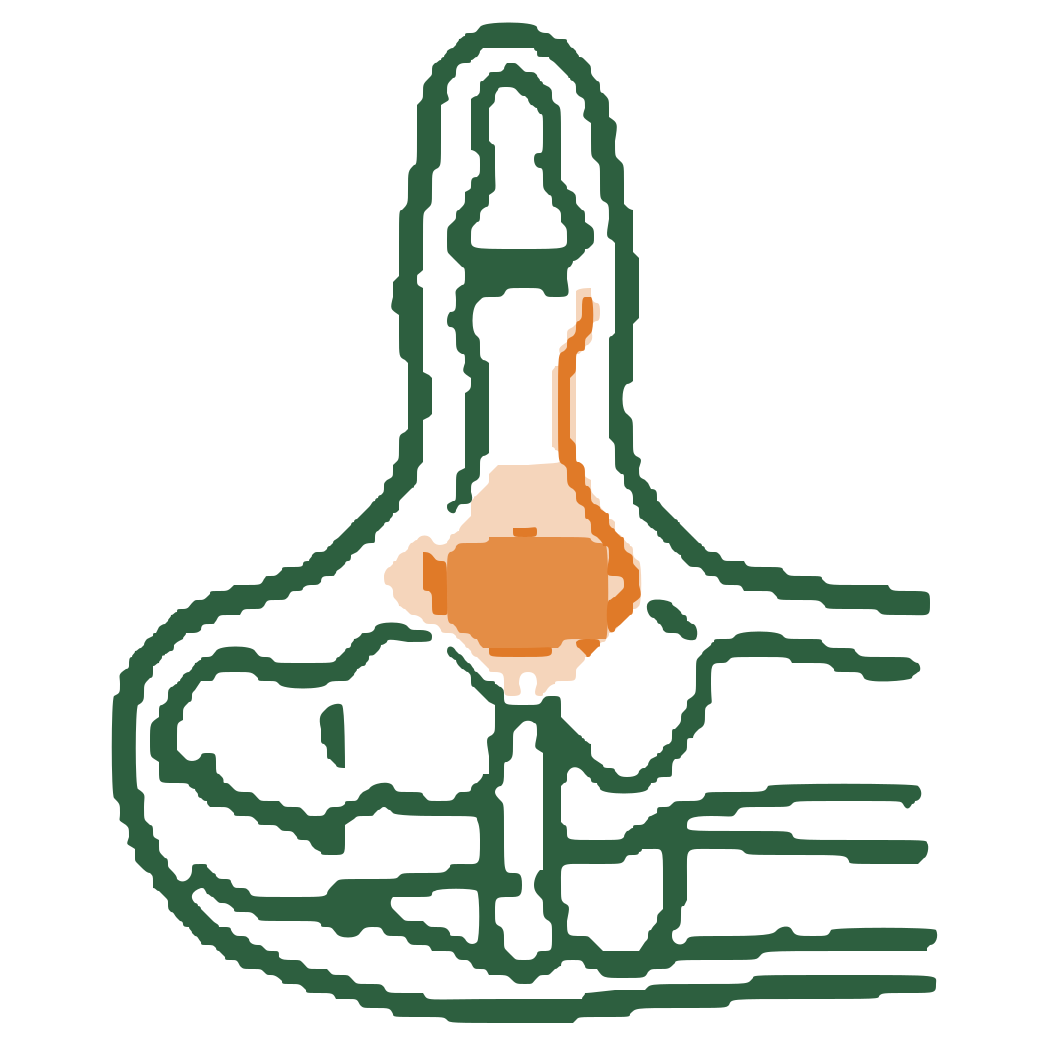
Cyriax is the orthopedic manual therapy developed by Dr. James Cyriax. Unlike classical chiropractic, this method focuses on soft tissues — tendons, muscles, joint capsules — through deep transverse friction and specific mobilizations.
On this page9
How does it work?
After standardized examination with selective movement tests, the therapist makes a precise tissue diagnosis: does the complaint come from contractile tissue (muscle/tendon) or inert tissue (ligament/capsule/nerve)?
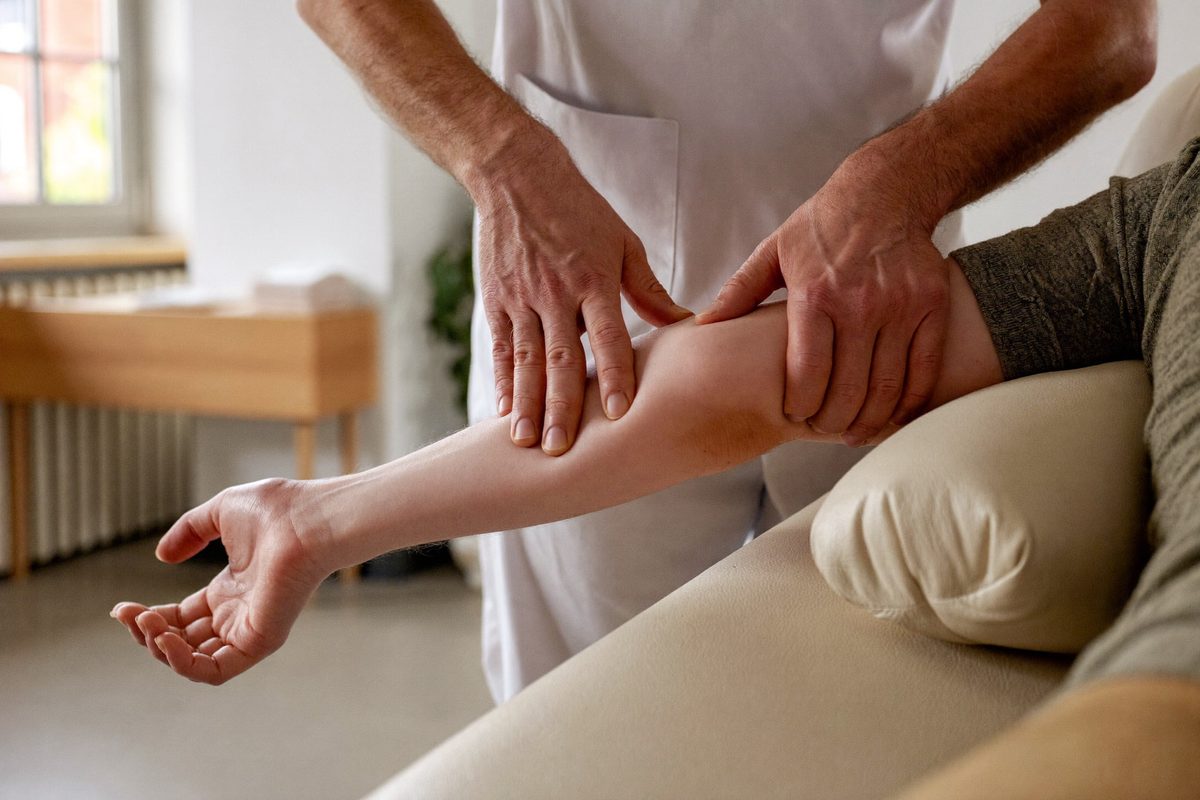
The core treatment is deep transverse friction — a massage technique performed across the fibers at the exact location of the injury. This loosens adhesions and stimulates the recovery process. In addition, specific mobilizations and manipulations may follow.
What can you expect?
A session lasts 25-40 minutes. The transverse frictions are intense and can be painful; the pain usually decreases during the massage due to local anesthesia of the nerve ending. After the session, the treated area may be sensitive for 24 hours.
Range of motion often increases immediately. For tennis elbow typically 6-10 sessions in total; for capsulitis (frozen shoulder) longer (10-20 sessions).
Scientific substantiation
Cyriax is still taught as a basic methodology within orthopedic manual therapy. Various studies show the effectiveness of transverse frictions in lateral epicondylitis. The diagnostic system (Cyriax's Rule) is applied internationally.
More about this treatment
Above you can read how we examine and treat the affected tissue itself. But a sore muscle rarely occurs alone. There is often a joint behind it that no longer moves.
Why your muscles get stuck
Many pain complaints arise from a mechanical blockage in the spine: back pain, neck pain, radiation to an arm or leg, and even a hernia. Patients often feel that something is twisted or displaced. The surrounding muscles tighten to protect that area. That tension hurts and makes you stiff — and that's why you seek help.
If you first take tablets for this and start exercising, the cause of the complaint will remain unchanged. That is the mistake most often made.
Our approach
The only way to effectively treat these complaints is to release the painful blockage of the vertebrae, so that the painful muscles can relax. If a painful muscle knot remains, we supplement the treatment with dry needling: a thin needle in the knot to speed up muscle recovery.
This is ultimately sufficient for 50 to 75% of patients. The problem will then recover naturally within a few weeks.
In the other patients, the complaints are so chronic or severe that hands alone do not save the day. In addition to manipulation and muscle work, prolotherapy or injection therapy is required. We use this to treat muscle knots and strengthen overstretched ligaments — the bands that hold your vertebrae in place — so that the spine remains stable.
Our experience
We frequently use chiropractic and manual therapy in our practice. Our entire team followed in-depth education and training at home and abroad.
We also pass on the subject ourselves. Sports carers and physiotherapists who want to learn the art from us can contact manueletherapietrainingen.nl.
This is how a session goes
Each process is tailor-made, but this is what a typical course looks like — from first intake to pain-free and maintenance. You always know exactly where you stand.
Selective resistance tests
Cyriax systematics determines exactly which tissue (tendon, ligament, capsule) is the source of pain. Much more diagnostic than standard physio.
Deep transverse frictions
Intensive transverse-to-fiber massage exactly on the affected attachment. Painful — but the pain decreases during local anesthesia of nerve endings.
Mobilization/manipulation
Specific mobilization or manipulation of associated joints. Range of motion often increases immediately.
Sensitive spot 24 hours
Treated area is sensitive for 24 hours — normal. Light activity is possible. 2-3 sessions per week for the first 2 weeks, then taper off.
Frequently asked questions
Why does it hurt so much?
The deep friction is deliberately intensive — it works mechanically on adhesions.
How does this differ from regular physiotherapy?
Cyriax diagnosis is more precise and the treatment more local and intensive.
Is there a need for a diagnosis in advance?
Yes — Cyriax relies heavily on precisely locating the affected structure.
Can I exercise after the session?
Light activity can; Do not exercise heavily for the first 24 hours.
How long before I notice a difference?
If diagnosed correctly, this is often noticeable after 3-5 sessions.
Not suitable for acute inflammation, hematoma, infection, calcifications (relative), neuropathic pain as the main component or severe osteoporosis at the treatment site. Classic schedule: 2-3 sessions per week for 2-3 weeks, then taper off.