Perineural Injection Therapy (PIT), also known as “Lyftogt technique,” is a safe and effective treatment for nerve pain — sciatica, hernia pain, wrist pain and headaches.
On this page11
How does it work?
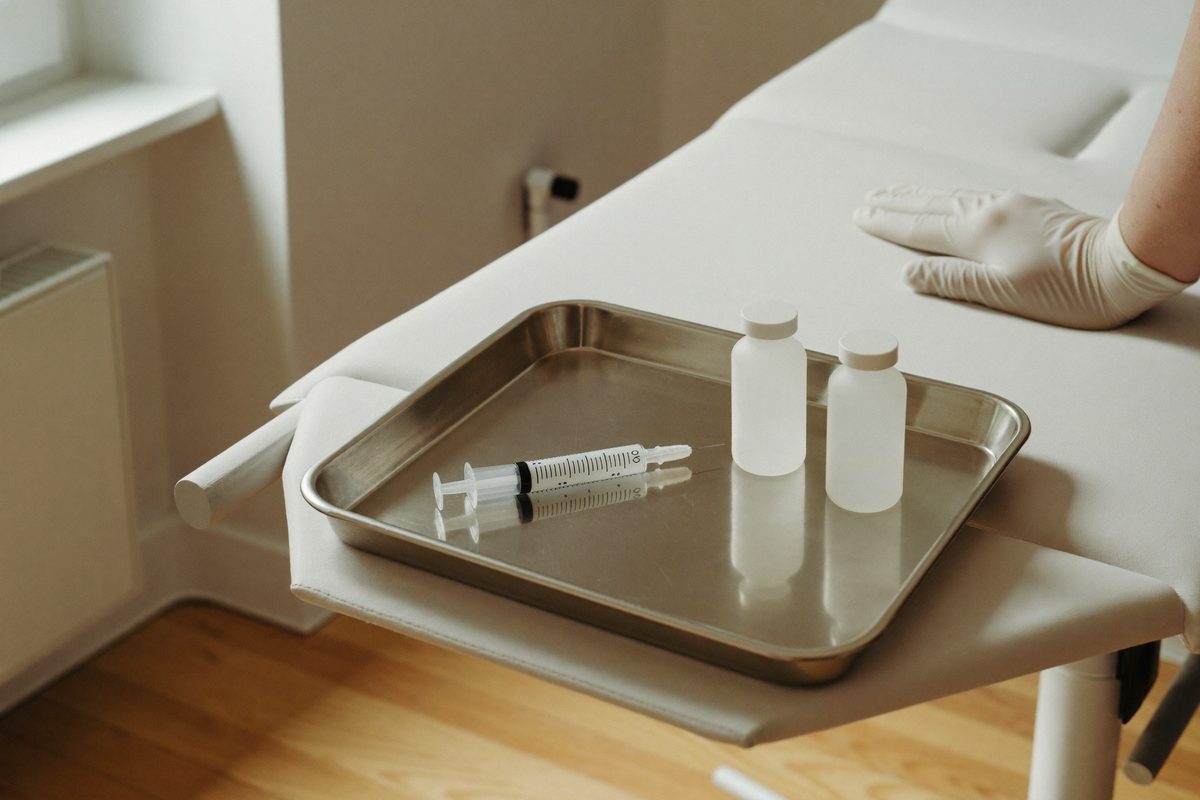
The doctor identifies painful “trigger points” along nerve pathways by palpation. Using very thin needles (27-30G), multiple superficial injections (0.3-1 ml per site) of isotonic 5% glucose are placed directly under the skin, right next to the nerve.
The body-warm glucose water normalizes nerve function via TRPV1 receptor modulation and often provides immediate pain relief — characteristic of PIT. Mannitol is added for some indications.
What can you expect?
Session lasts 15-30 minutes with multiple injections (often 5-25, depending on the area). The injections feel like short mosquito pricks. Many patients experience pain relief within minutes — which helps confirm diagnostically that the treated nerve is indeed the source.
No after-pain as with prolotherapy because no inflammatory response is generated.
Scientific substantiation
Lyftogt publiceerde meerdere case series met gunstige resultaten. Een gecontroleerde studie (Maniquis-Smigel et al.) toonde verbetering bij chronische lage rugpijn met subcutane dextrose. Evidence-basis bestaat vooral uit observationele studies.
More about this treatment
We also call this treatment neuroprolotherapy. The name immediately says something: it resembles prolotherapy, but the treatment does something completely different. To understand why a little sugar water takes away pain, you first need to know what goes wrong in the nerve itself.
What goes wrong in an irritated nerve
A nerve that is damaged — by an accident or by long-term strain — becomes more sensitive than average. That's called sensitization. Such a nerve will report pain where it did not occur before. The irritation around it also has a name: neurogenic inflammation.
This is a different type of pain than the pain of a worn joint or a broken tendon. And so it requires a different approach.
Why glucose calms the nerve
Glucose acts on the TRPV1 receptors of the nerve: a kind of switches that play a role in this irritation. By acting on this, glucose dampens inflammation. This gives the nerve the opportunity to heal and function normally again.
Notice what isn't happening. Glucose does not work as a painkiller or as an anesthetic. So it does not suppress your pain signal — it treats the cause of the complaints, and therefore the pain ultimately decreases.
Difference with prolotherapy
The names are similar and glucose is injected in both cases. That's where the similarity ends.
Prolotherapy uses a high concentration of glucose in ligaments, tendons and muscle attachments. The aim is to provoke an inflammation and healing response. Neuroprolotherapy uses a mild concentration around the nerve, and aims to dampen a reaction.
Two opposite routes to the same goal: tackling the cause of the complaints instead of suppressing the pain. We therefore regularly combine both treatments.
Complaints that we handle with it
Recent scientific research clearly shows that neuroprolotherapy is effective for chronic lower back pain, Achilles tendon pain, knee pain, shoulder pain and elbow pain. In addition, in practice we see improvement in many more pain complaints, such as neck pain, headache and Maigne's syndrome.
Number of treatments
We treat weekly. On average, about 6 treatments are needed, but that depends greatly on your condition.
This is how a session goes
Each process is tailor-made, but this is what a typical course looks like — from first intake to pain-free and maintenance. You always know exactly where you stand.
Locate trigger points
Doctor palpates exactly which skin nerve is irritated — often along fixed anatomical routes. You provide pain feedback.
Series of subcutaneous injections
Very thin needles (27-30G). Multiple injections (5-25) of 0.3-1 ml 5% glucose directly under the skin, next to the nerve.
Instant pain relief?
Many patients experience pain reduction within minutes — characteristic of PIT. Helps confirm diagnostically that we are hitting the right nerve.
No after-pain
Unlike prolotherapy: no inflammatory reaction, no after-pain. You can function again immediately. 1-2 sessions weekly in the start phase.
Frequently asked questions
Is this the same as prolotherapy?
No. Prolotherapy goes deeper into ligaments/tendons and uses higher concentration; PIT is superficial and uses 5% glucose.
Immediate pain relief possible?
Yes — that is characteristic of PIT and is used diagnostically.
How many injections per session?
Often 5-25 depending on the size of the area.
Do they hurt?
Minimal — many patients find it less annoying than a tattoo.
Does it work for everyone?
Often good for neurogenic pain component; For purely mechanical complaints we often choose other therapies.
Not suitable for local skin infections, blood clotting disorders, allergy to lidocaine (with combined preparations), or uncontrolled diabetes. Often works well for neurogenic pain components; less suitable for purely mechanical complaints.
Scientific references (7)
Show all sourcesHide the sources
- Lyftogt J. Subcutaneous prolotherapy for Achilles tendinopathy. Australia's Musculoskeletal Medicine Journal. 2007; 12:107-109.
- Lyftogt J. Prolotherapy for recalcitrant lumbago. Australia's Musculoskeletal Medicine Journal. 2008; 13:18-20.
- Lyftogt J. Subcutaneous prolotherapy treatment of refractory knee, shoulder and lateral elbow pain. Australia's Musculoskeletal Medicine Journal. 2007;12:110-112.
- Bertrand H, Kyriazis M, Reeves KD, Lyftogt J, Rabago D. Topical MannitolReduces Capsaicin-Induced Pain: Results of a Pilot-Level, Double-Blind,Randomized Controlled Trial. PM R. 2015 Nov;7(11):1111-7. doi:10.1016/j.pmrj.2015.05.002. Epub 2015 May 12. PubMed PMID: 25978942.
- Yelland MJ, Sweeting KR, Lyftogt JA, Ng SK, Scuffham PA, Evans KA.Prolotherapy injections and eccentric loading exercises for painful Achillestendinosis: a randomised trial. Br J Sports Med. 2011 Apr;45(5):421-8. doi:10.1136/bjsm.2009.057968. Epub 2009 Jun 22. PubMed PMID: 19549615.
- Version:1.0 StartHTML:000000363 EndHTML:000000861 StartFragment:000000538 EndFragment:000000823 StartSelection:000000538 EndSelection:000000823 SourceURL:https://www.ncbi.nlm.nih.gov/pubmed/?term=Six-month+Efficacy+of+Perineural+Dextrose+for+Carpal+Tunnel+Syndrome%3A+A+Prospective%2C+Randomized%2C+Double-Blind%2C+Controlled…&report=docsum&format=text
- Wu YT, Ho TY, Chou YC, Ke MJ, Li TY, Tsai CK, Chen LC. Six-month Efficacy of Perineural Dextrose for Carpal Tunnel Syndrome: A Prospective, Randomized, Double-Blind, Controlled Trial. Mayo Clin Proc. 2017 Aug;92(8):1179-1189. doi: 10.1016/j.mayocp.2017.05.025. PubMed PMID: 28778254.