However, it also happens that patients are no longer bothered by the old problem, but are bothered by the scar from the operation. This is a specific clinical picture: scar pain.
On this page5
How scar pain arises
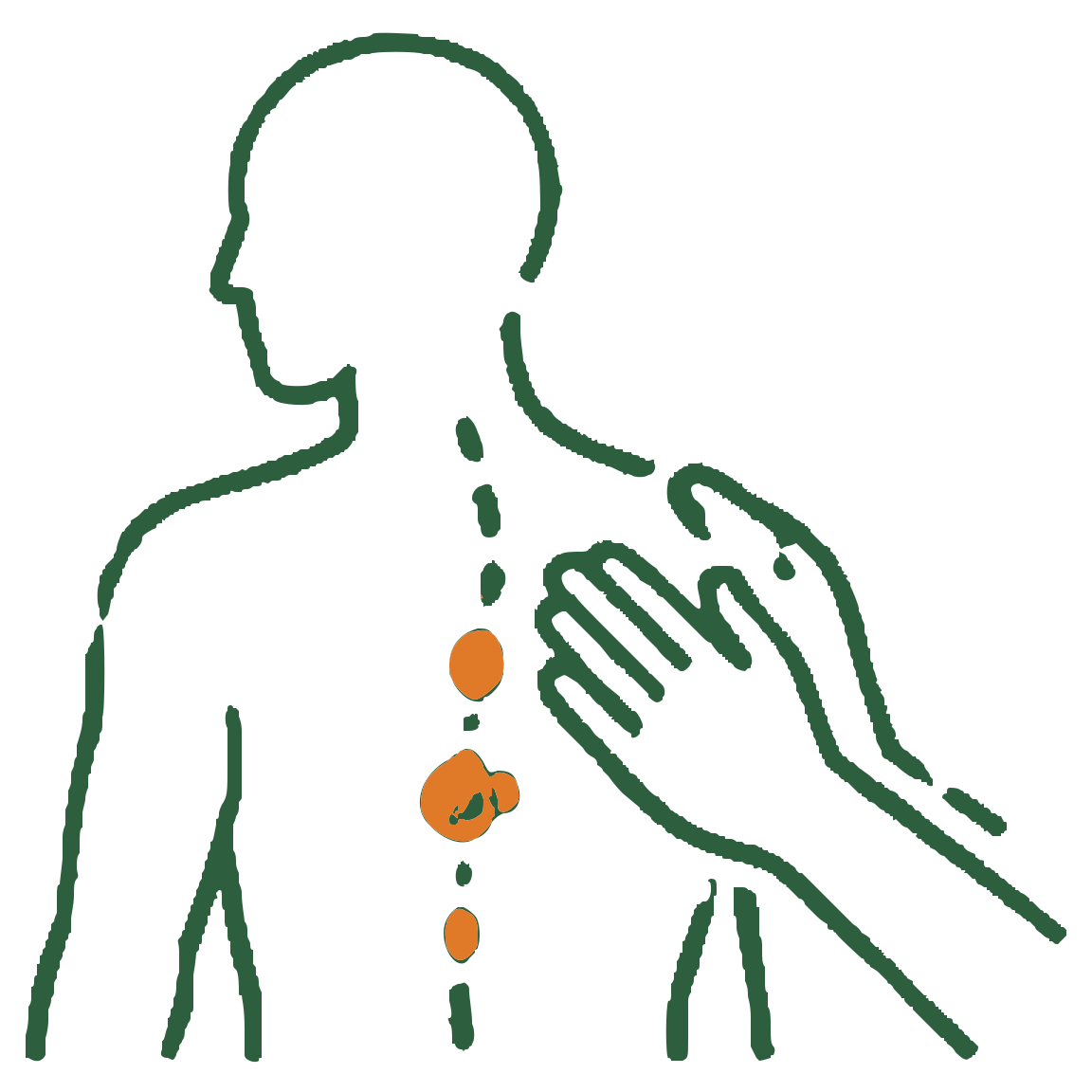
Under the skin lies a complex web of superficial sensory nerves. These nerves send information to the brain, such as pain and touch of the skin. When an incision is made during surgery, this web of nerves is severed. Afterwards, the nerves never grow back exactly to their pre-operative condition, but fortunately that usually does not cause any problems.
Sometimes one of the nerve stumps of the severed nerves (a neuroma) becomes painful and inflamed, or a nerve branch becomes pinched in the scar tissue. This can cause unpleasant and long-lasting complaints.
Complaints and symptoms
The scar itself is often purple, swollen and tight to the touch. This is in stark contrast to what a scar should be: skin-colored, not swollen, not painful and calm.
The complaints can vary:
- shooting, sharp pain on local pressure or friction on the skin
- a pulling sensation in the scar
- burning pain or tingling
- spontaneous attacks of pain
- aggravation by cold or heat
- a numb patch of skin around the scar
These complaints are often chronic and more or less constantly present.
Previous treatments often fail
Our patients with scar pain have often already been treated with creams, painkillers, antidepressants or corticosteroid injections into the scar to relieve the pain. There have often also been series of ultrasounds, MRIs and keyhole surgery, without a cause of the pain being found. The disadvantage of these treatments is that the painful nerves are often not treated powerfully enough, causing the complaints to keep coming back.
Our treatment: perineural injection therapy (P.I.T.)
In our practice we treat scar pain with Perineural Injection Therapy (P.I.T.). This is a superficial injection therapy designed to treat pain due to irritation and inflammation of superficial nerves.
The treatment consists of several small, superficial injections of a mild solution of glucose or mannitol (forms of sugar) around the painful nerve or scar. Glucose and mannitol work directly on the irritated nerve by reducing inflammation. They do not have a direct anesthetic effect. The result of the treatment is a decrease in pain, because local irritation and inflammation are dampened and healed.
Sometimes we supplement the treatment with injections of the anesthetic procaine, which has an anesthetic but also an anti-nerve effect. Due to the mild treatment method, the treatment is virtually painless and very safe.
It often takes 4 to 6 treatments to get long-lasting relief.
Recognizable symptoms
- Sharp, shooting pain when pressed or rubbed over the scar
- A pulling sensation in the scar
- Burning pain or tingling
- Spontaneous attacks of pain
- Complaints that worsen with cold or heat
- A numb patch of skin around the scar