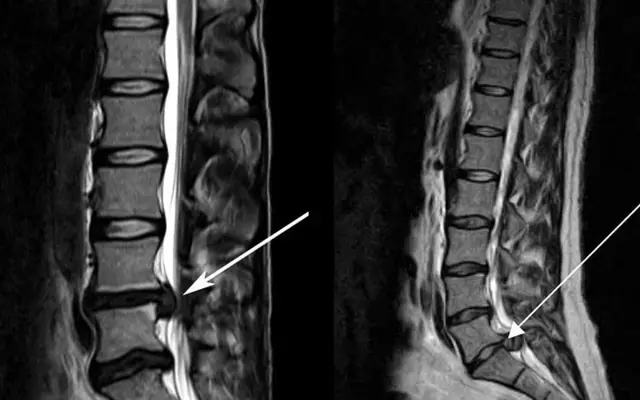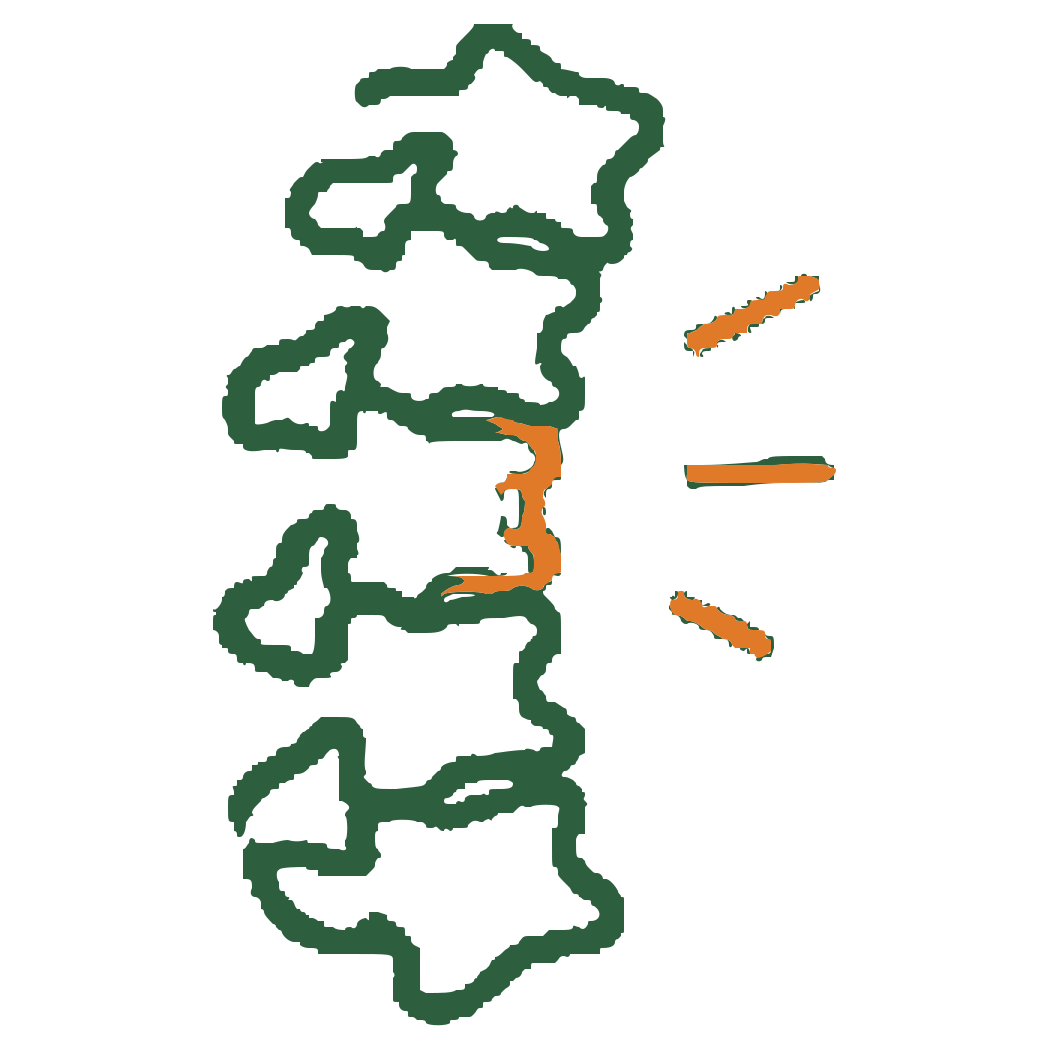
A herniated disc (HNP - hernia nuclei pulposi) occurs when an intervertebral disc bulges or tears, causing nerve tissue to become pinched. This often causes severe radiating pain, tingling or loss of strength in the arm or leg.
Hernia protocol without surgery
In the past, surgery was performed quickly. Nowadays it is clear: most hernias can be repaired without surgery. We investigate what helps you with this; If surgery is necessary, we will refer you.
Our protocol consists of:
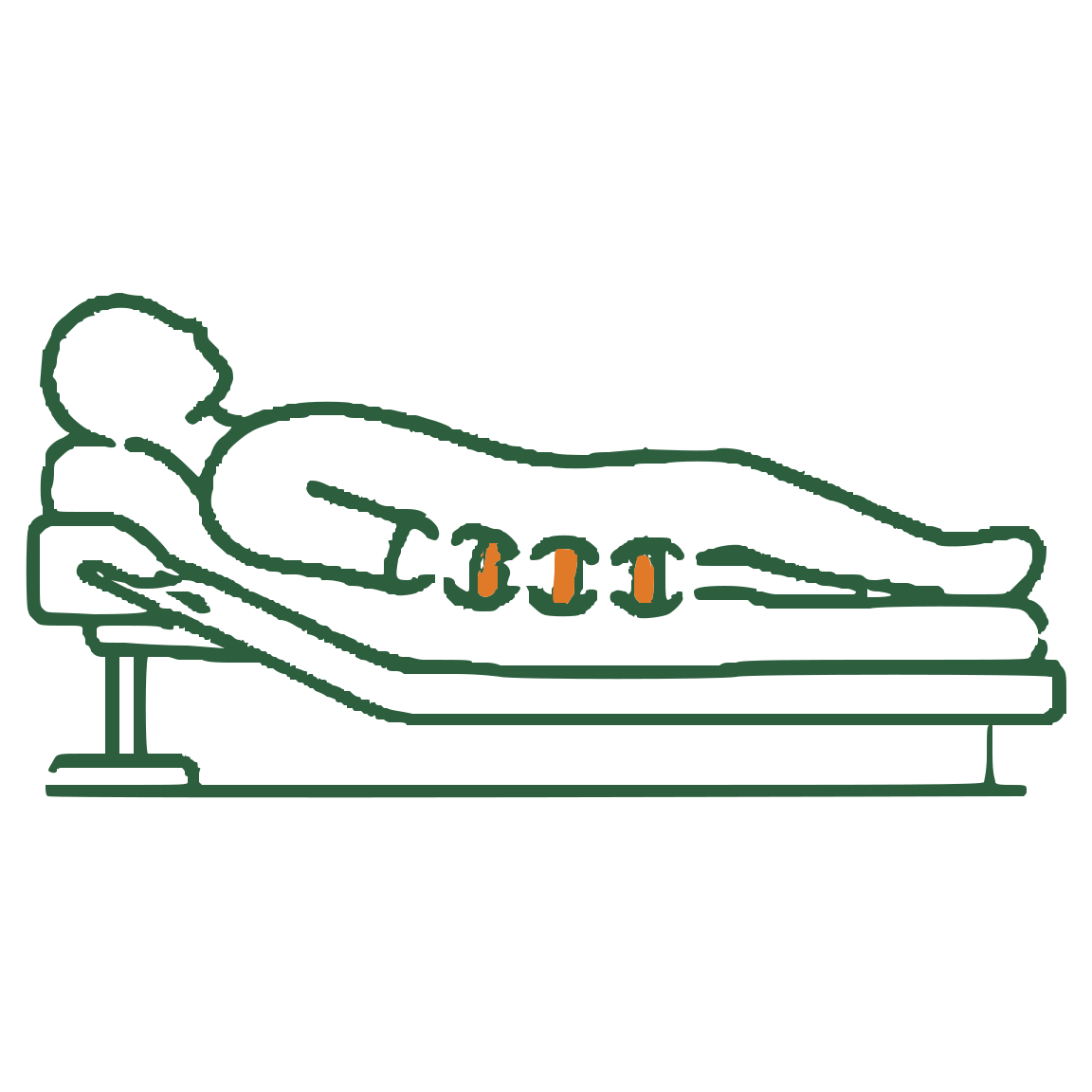
- Spinal decompression — targeted stretching of the spine to relieve pressure on the nerve
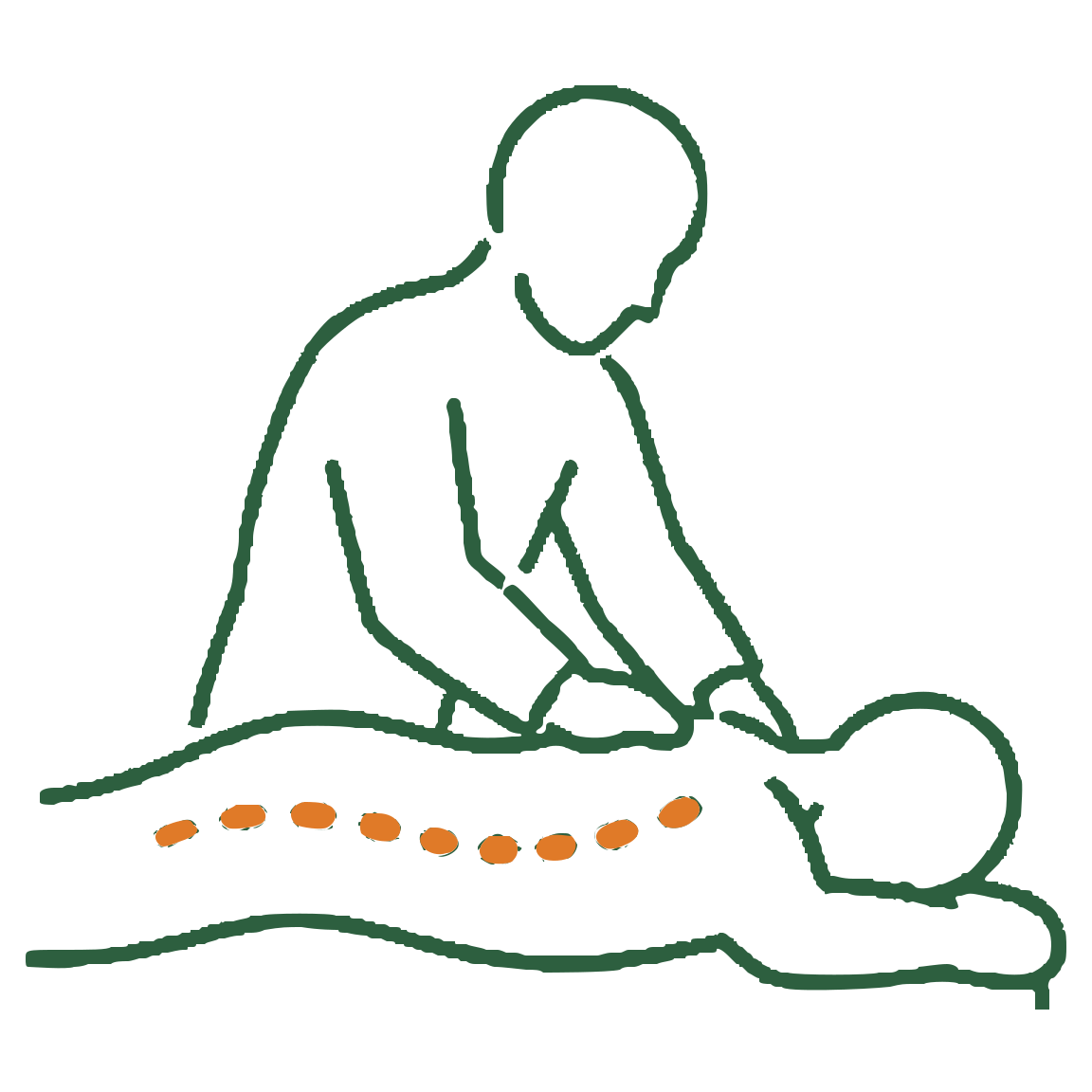
- Gentle chiropractic — no cracking in the acute phase
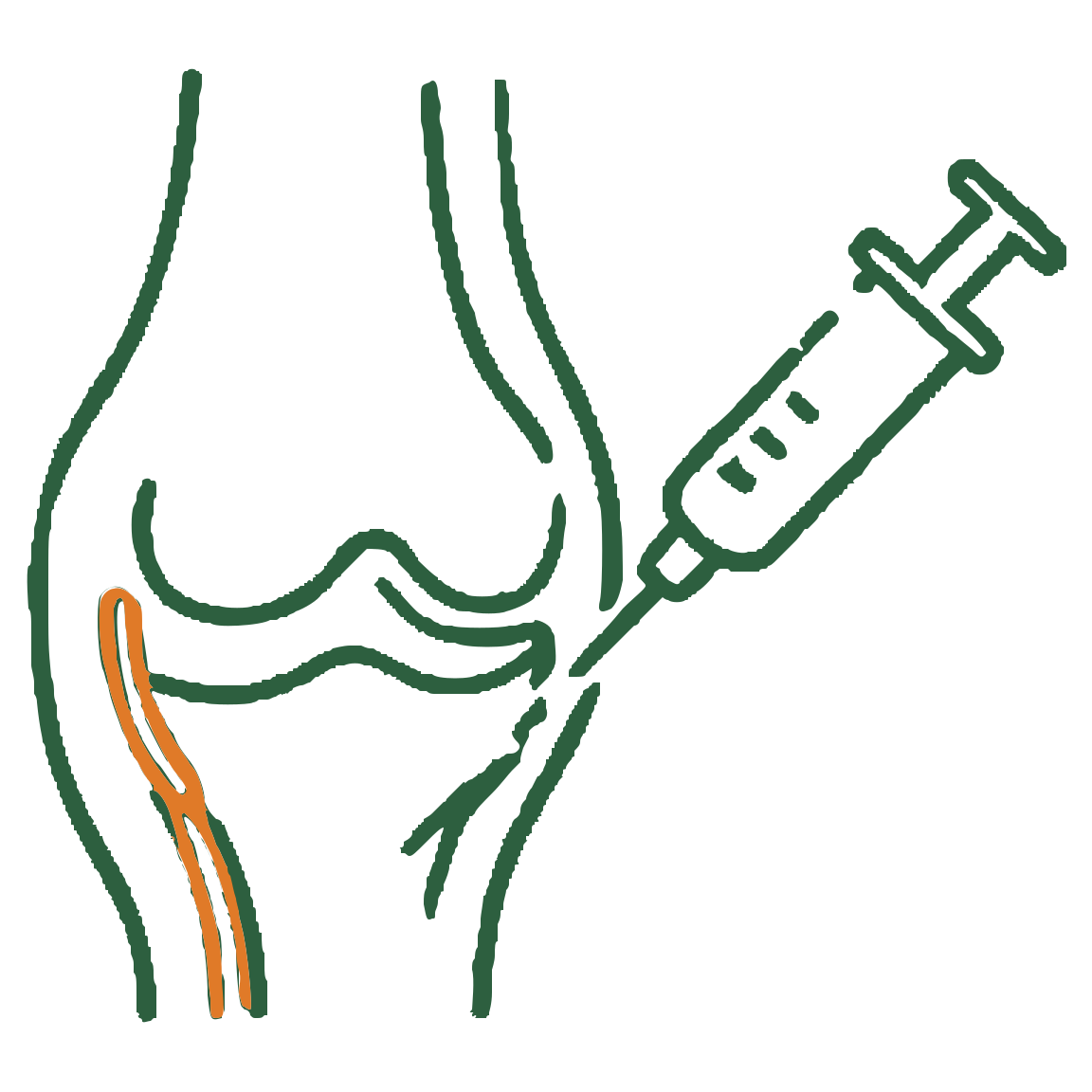
- Perineural injection therapy (PIT) — targeting the painful nerve
- Prolotherapy — for chronic hernias for tissue repair
For patients considering delaying or avoiding hernia surgery, our multidisciplinary approach is often the solution.
Your recovery journey
Each process is tailor-made, but this is what a typical course looks like — from first intake to pain-free. You are not committed to anything and you always know where you stand.
MRI check & intake
If no recent MRI: referral. Otherwise direct intake. We assess whether the hernia protocol is suitable and discuss the process.
Intensive decompression
3 sessions per week on the decompression table. Traction creates negative pressure in the disc, radiating pain decreases quickly.
Stabilization phase
Taper to 1-2 sessions per week. We add gentle chiropractic + targeted exercises for the transversus abdominis.
Prevention
A home exercise program to prevent new complaints. There is no need to come back; If you experience complaints again later, you are welcome.
Frequently asked questions
When is surgery necessary?
Only in case of cauda equina syndrome, progressive loss of strength or if 6-12 weeks of conservative treatment does not help.
Does the hernia really disappear?
Often yes — research shows resorption of the disc material within 6-12 months in more than 60% of patients.
Can I exercise with a hernia?
Walking and swimming are good. Avoid compression loading (squats, running) until the pain is gone.
Does a hernia come back?
Relapse is possible; good core control exercises reduce the risk significantly.
Is a chiropractor a good idea for a herniated disc?
For most herniated discs it is, and guidelines list manual treatment as one of the options for persistent back pain that radiates. What we do depends on the examination: with an irritated nerve we work gently and with traction, not with force. If there are warning signs — loss of sensation around the buttocks and groin, difficulty passing urine, or increasing loss of strength — we do not treat, but refer you the same day. That is not caution for form’s sake: with those signs every hour counts.
Does an MRI help with the diagnosis?
Often yes, if the complaints are serious or do not respond to treatment. For mild complaints, a clinical diagnosis is often sufficient.