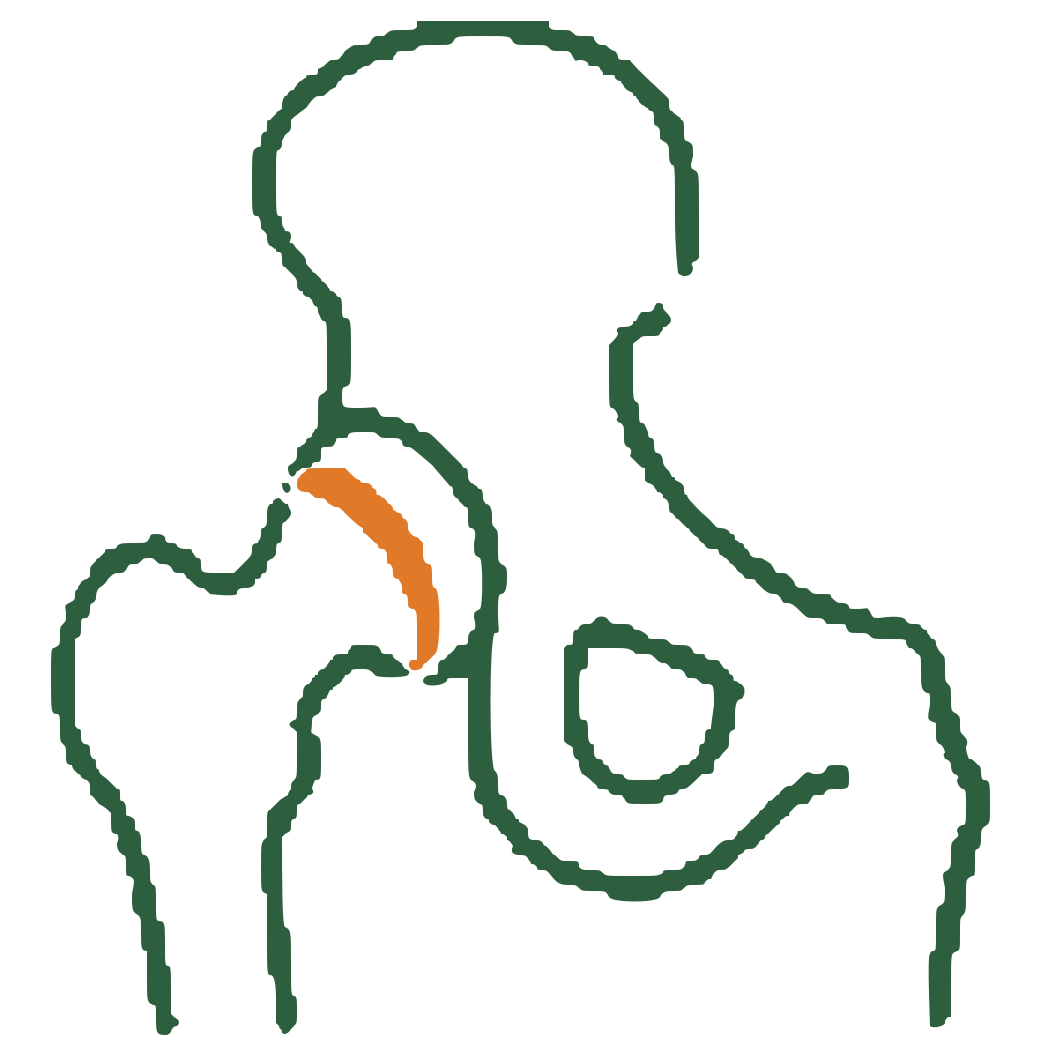
We regularly see patients in our practice with pain in the groin, in the buttock, on the side of the thigh and in the region that people refer to as the hip. This pain is often accompanied by stiffness and stiffness.
On this page11
- Complaints that may indicate hip osteoarthritis
- Not all pain around the hip comes from the hip joint
- The usual treatment is often not enough
- The consultation
- Prolotherapy
- Injections with an anti-inflammatory
- Hyaluronic acid
- Platelet rich plasma (PRP)
- Pain in the hip region after hip surgery
- Make an appointment
- Recognizable symptoms
Complaints that may indicate hip osteoarthritis
- Stiffness, especially in the morning or after a period of rest: the hip must first be warmed up before the day can start.
- Disturbed night's sleep due to pain when lying on the side or turning over in bed. Many patients sleep with a pillow between their legs.
- Pain during the day when walking, standing for a long time or sitting in the same position for a long time. Men can no longer swing their legs over the bicycle.
- Movements that become increasingly stiff due to stiffness, for example the golf swing or tennis.
- Creaking sounds during movement (crepitation), associated with stiffness and cartilage wear.
- A sudden blockage with acute pain, because small pieces of cartilage have come loose in the joint. The pain will go away if you gently move the joint.
All these symptoms may indicate osteoarthritis of the hip joint.
Not all pain around the hip comes from the hip joint
Pain in the buttock, the groin and the side of the hip can come from the hip joint, but we also often see other painful structures around the joint: an inflamed bursa, a painful pelvic joint, or a problem in the lower back.
Even if an X-ray shows wear and tear of the hip, the pain in this region does not necessarily come from the hip joint. A good diagnosis cannot be made without a thorough physical examination.
The usual treatment is often not enough
Complaints of hip osteoarthritis are usually treated with physiotherapy and a course of anti-inflammatory tablets. This may provide temporary relief, but in many cases it is not enough. Many patients need more specialized care, while immediately registering for hip surgery is a bridge too far for most people.
We believe that all complaints of the musculoskeletal system should initially be treated maximally conservatively — non-surgically.
The consultation
A consultation always starts with an interview, followed by an extensive physical examination and viewing any X-rays or other imaging. During this examination we determine which treatment program is best for you.
Prolotherapy
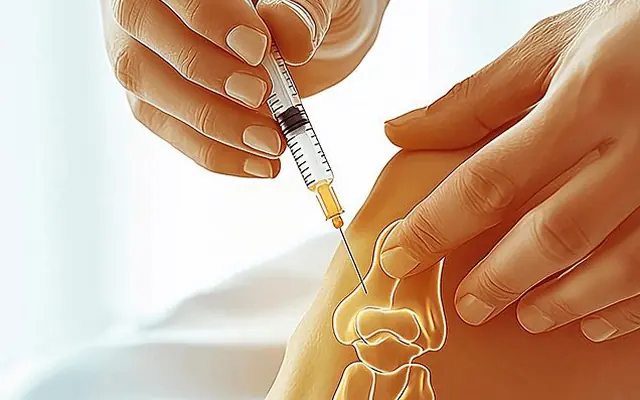
Is the joint mobile or even unstable, surrounded by painful tendons and painful muscle attachments? Is there also pelvic instability or pain radiating from the lower back? Then we choose prolotherapy. With a number of treatments we aim to stabilise the hip ligaments and treat chronic tendon injuries and pain sources outside the hip joint, such as the SI joint (the joint between the sacrum and the pelvis) or the facet joints of the lower back. Prolotherapy often suits active and sporty patients who have injured their hip at a young age for various reasons.
Injections with an anti-inflammatory
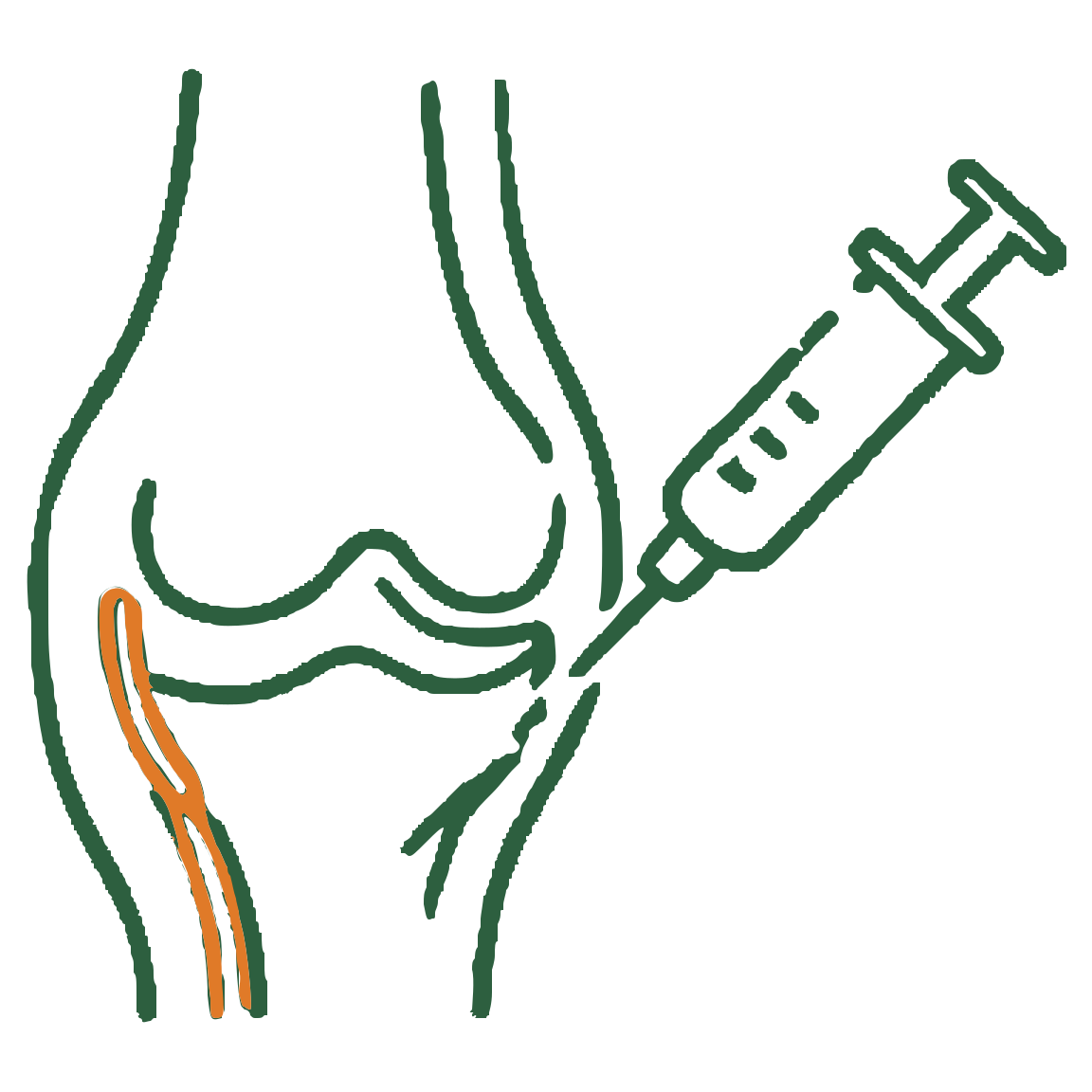
If the joint has become stiff and very painful due to excessive inflammation (capsulitis) of the hip, a series of injections with an anti-inflammatory (corticosteroids) is a good solution. In most cases, a number of successive injections are needed to dampen this excessive inflammation so that the body has a chance to repair itself.
If the inflammation can be controlled in this way without the need for injections too often, and if the inflammation does not return too easily, patients are often helped very well.
Hyaluronic acid
If the inflammation returns too often, or if we judge that more is needed than just anti-inflammatory action, we use a natural lubricant for the joint.
Hyaluronic acid is a thick gel used to relieve symptoms of osteoarthritis. It not only lubricates the joint but also has a mild anti-inflammatory effect. It would also prompt the joint to produce more lubricant itself. Hyaluronic acid is considered safe and has few side effects. It has not been shown to delay hip surgery: for the hip the evidence is even weaker than for the knee, and guidelines do not recommend it. Depending on the person, the hyaluronic acid injection needs to be repeated 2 to 4 times a year.
Platelet rich plasma (PRP)
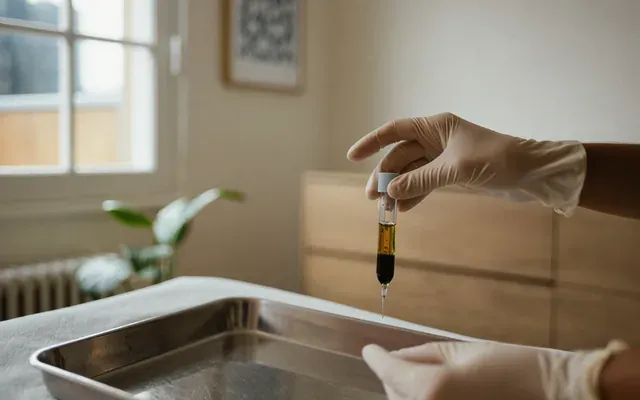
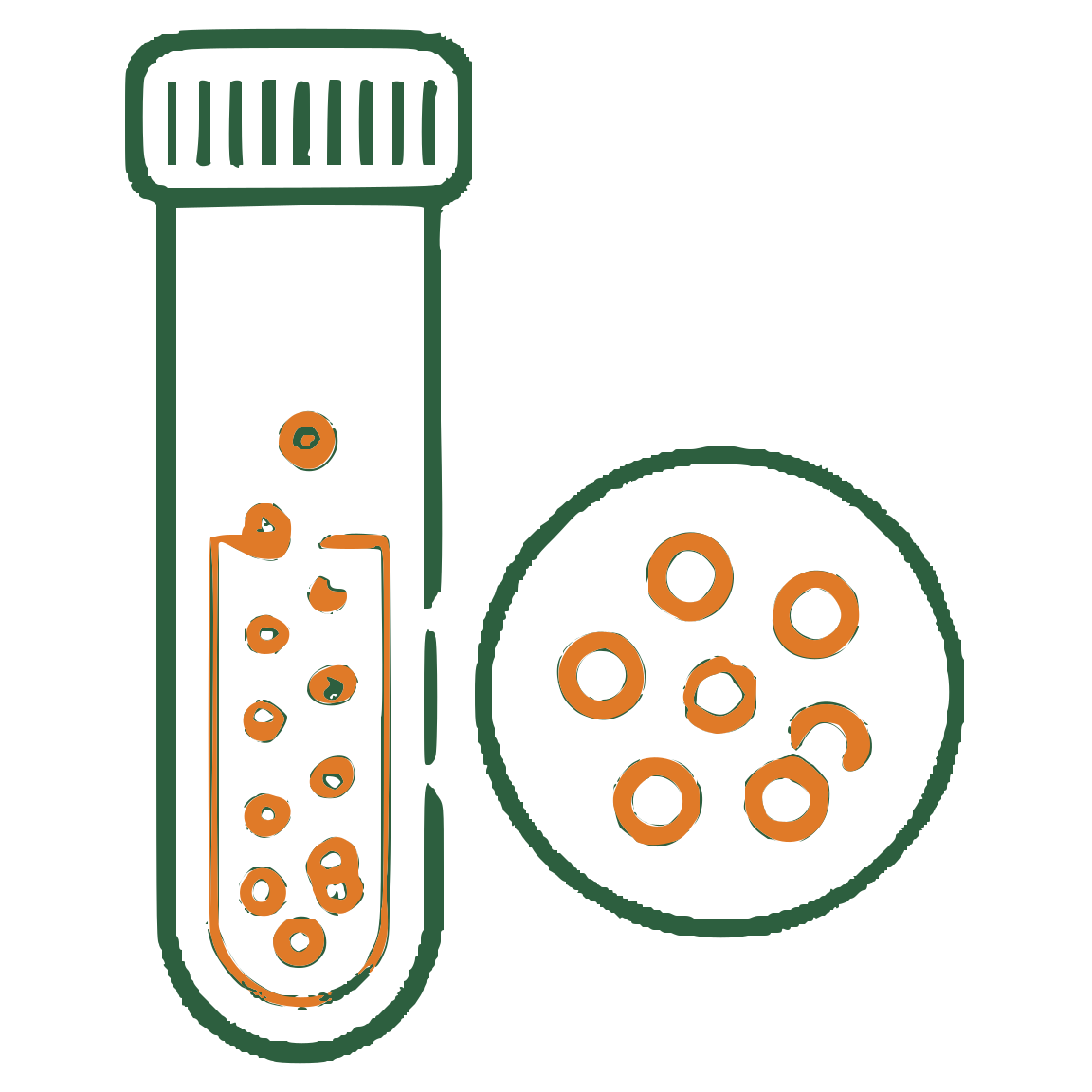
For osteoarthritis we use, among other things, Platelet Rich Plasma (PRP); how well it works varies from person to person. In this treatment we draw your blood, centrifuge it and isolate the repair cells (platelets) and growth factors. We inject this concentrated product into the joint or at the site of the injury. This gives a strong stimulus for healing.
PRP does not create new cartilage. The aim is to reduce inflammation and pain in the joint; research on this shows mixed results. The PRP injections are given in a series, usually combined with prolotherapy to treat all surrounding structures as well.
Pain in the hip region after hip surgery
Finally, there is the problem of pain in the hip region after joint replacement surgery. When a new hip is fitted, the pain from the worn hip joint itself is naturally removed. What often does persist is pain from the structures around the hip. We regularly see patients with chronic postoperative pain.
That pain may come from a problem that was already present before the operation, such as radiation from a SI joint (pelvic joint) and the low back, or painful muscle attachments and tendons. Postoperative pain can also be the result of a problem or overload that occurs after the operation, despite a successful procedure. Even a small cavity of unabsorbed blood left after surgery can cause long-term pain.
If you have pain after a procedure, first return to the treating orthopedic surgeon to discuss the problem. The integrity of the prosthesis must first be confirmed.
Make an appointment
Are you looking for a non-surgical treatment for hip osteoarthritis and the pain and discomfort that come with it? Then make an appointment.
Recognizable symptoms
- Stiffness in the morning or after rest, the hip must be started first
- Pain when lying on your side or turning over in bed
- Pain in the groin, buttock or side of the thigh
- Pain when walking, standing or sitting still for a long time
- Cracking sounds when moving the hip
- A sudden blockage with acute pain that disappears again
Scientific references (3)
- Dallari D, Stagni C, Rani N, Sabbioni G, Pelotti P, Torricelli P, Tschon M, Giavaresi G. Ultrasound-Guided Injection of Platelet-Rich Plasma and Hyaluronic Acid, Separately and in Combination, for Hip Osteoarthritis: A Randomized Controlled Study. Am J Sports Med. 2016 Jan 21.
- Rivera F. Single intra-articular injection of high molecular weight hyaluronic acid for hip osteoarthritis. J Orthop Traumatol. 2015 Oct 8. [Epub ahead of print] PubMed PMID: 26449357.
- Meheux CJ, McCulloch PC, Lintner DM, Varner KE, Harris JD. Efficacy of Intra-articular Platelet-Rich Plasma Injections in Knee Osteoarthritis: A Systematic Review. Arthroscopy. 2015 Sep 29. pii: S0749-8063(15)00659-3. doi: 10.1016/j.arthro.2015.08.005. [Epub ahead of print] Review. PubMed PMID: 26432430.