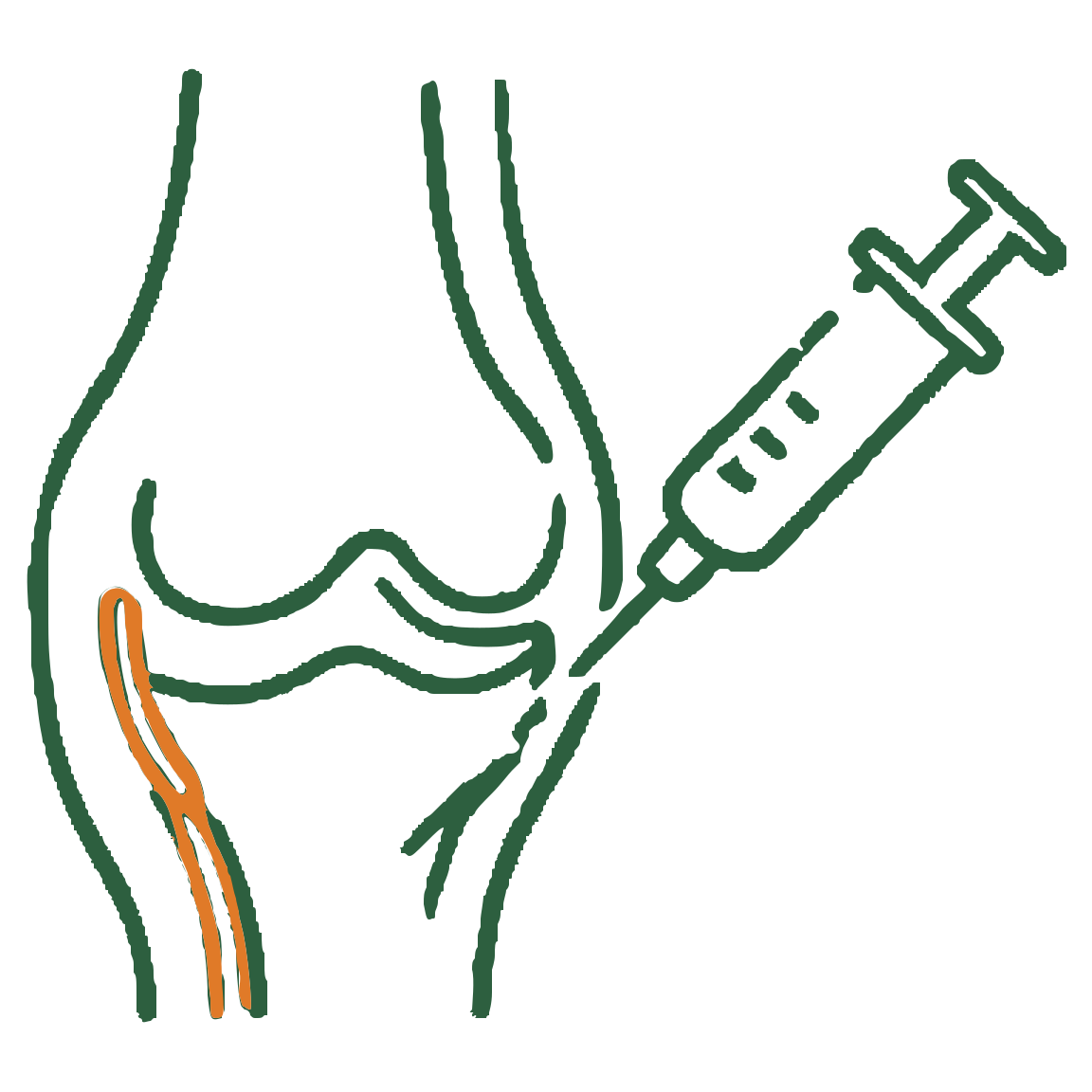
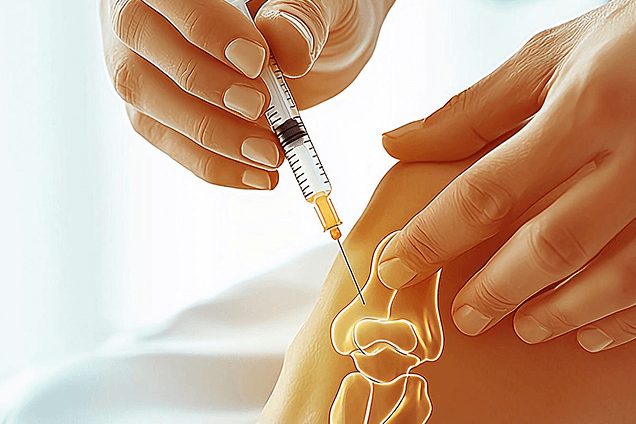
Prolotherapy (“proliferation therapy”) is a regenerative technique in which we inject a hypertonic dextrose solution into painful ligaments, tendons or joints. It stimulates the body to produce its own repair tissue.
On this page10
How does it work?
A filtered dextrose solution (usually 15-25%) is mixed with a local anesthetic (lidocaine) and injected with thin needles into specific attachment points of tendons and ligaments. The doctor works on the basis of anatomical landmarks or under ultrasound guidance.
Multiple injection points are often treated per session. The injected dextrose causes a controlled, mild inflammatory response that causes the body to direct fibroblasts to form collagen — effectively repairing the tissue.
What can you expect?
A session lasts 20-40 minutes. The injections have a short stinging effect; Afterwards, a dull, pressing pain occurs at the treatment site for 24-72 hours — this is the desired inflammatory response and is part of the recovery process.
Important: painkillers such as ibuprofen are not recommended because they slow down the recovery process. Paracetamol is allowed. Take it easy with sports for the first 3-5 days; then build up gradually.
Scientific substantiation
Moderate evidence in knee osteoarthritis, lateral epicondylitis (tennis elbow) and Achilles tendonitis. The mechanism of action is still being investigated. In 2019, the American College of Rheumatology advised restraint in knee osteoarthritis due to varying study quality.
Where your pain comes from
Ligaments are the bands that hold your joints together. Tendons connect the muscles to the bone. Together they keep a joint in place and moving. If they are damaged or stretched, it hurts.
And that happens often. The vast majority of orthopedic pain complaints arise from damaged or unstable ligaments, cartilage, tendons and muscle attachments. Due to an accident, a sports injury or years of overuse, they can tear, stretch and become less elastic. Think of an old elastic: it can hold less and is more likely to break.
A completely torn ligament requires a surgeon to repair. But most complaints do not come from such a complete tear. They come from tissue that has become weakened, overstretched, overloaded and unstable.
It doesn't stop there. When ligaments and tendons can no longer stabilize a joint, joint instability occurs. This can lead to pain, dysfunction, osteoarthritis, cartilage damage and many more chronic problems.
Why does that tissue not heal itself?
Ligaments have little blood supply. As a result, they naturally heal poorly. If a ligament is damaged or stretched, it often only partially recovers. Compare it to a muscle injury or a wound on your skin: they are full of blood vessels and usually heal quickly.
Maybe you recognize that. An old injury that never quite got better. Or pain without a clearly identifiable cause, for which you have already tried rest, physiotherapy or chiropractic. Prolotherapy is little known in the Netherlands, but it is an effective treatment, precisely because it does not address the pain, but the weakened structure underneath.
What initiates the injection in your body
When a tendon, ligament, joint or muscle attachment is injured, your body responds with an inflammatory response. That sounds wrong, but it's your body's natural way of repairing damage. Don't confuse it with a bacterial infection — there's a bacteria behind that, not here.
We are calling for exactly that response. The high concentration of glucose causes an osmotic shock reaction at the site where we puncture. We also use the needle to make small, controlled wounds. Your body therefore treats the old, poorly healed injury as if it were a fresh injury. Blood supply improves and more repair cells and growth factors come to the area. It is part of this that you will feel pain, stiffness and soreness for a few days afterwards.
This is also where the advice about painkillers comes from. Anti-inflammatories (NSAIDs) such as diclofenac, ibuprofen or naproxen do relieve the pain, but they inhibit the healing response that we need. For this reason, they are also not a good idea after an acute muscle, tendon or ligament injury.
What happens next is the core of the treatment. Your body produces new, healthy connective tissue: collagen. Ligaments and tendons proliferate — they become thicker and stronger and can perform their duties again. The back, neck, pelvis and joints become more stable. Overworked muscles and muscle knots can finally relax. And the pain decreases greatly.
Glucose is the oldest and most commonly used drug for this purpose worldwide, due to its safety and effectiveness. There are also other substances that can provoke or stimulate such a healing response. For example, a lot of research has been done into ozone gas and Platelet Rich Plasma in recent years.
Number of treatments
First we assess whether you are eligible. After that, the number of treatments depends on what you have, because prolotherapy is used for a wide variety of conditions. For simple injuries, 1 to 3 treatments are enough. In extensive and severe cases there may be more than 10. For the average patient with back problems, we start with a series of 6 weekly treatments. We always do Prolotherapy of the spine together with chiropractic and manual therapy — that gives the best results.
The vast majority of patients have good results, even with complaints that have existed for years. As with any medical treatment, results vary; your overall health and lifestyle play a role. The treatment itself is safe: we only prick, we do not cut, and there are virtually no side effects.
Complaints that we treat with prolotherapy
- Back pain, facet syndrome, lumbago, acute back problems, chronic back problems
 Neck pain and whiplashMore about Neck pain & whiplash
 Pelvic pain, sacroiliac syndrome and pelvic instabilityMore about Pelvic instability
- Shoulder instability and shoulder pain
- Tendonitis and chronic tendon problems
- Tennis elbow and golfer's elbow
 Hip pain and hip osteoarthritisMore about Hip Osteoarthritis
 Knee pain and knee osteoarthritisMore about Knee osteoarthritis
- Ankle complaints
This list is not complete. On our pages and blog posts you can read more about the conditions and complaints that we treat.
This is how a session goes
Each process is tailor-made, but this is what a typical course looks like — from first intake to pain-free and maintenance. You always know exactly where you stand.
Marking & preparation
Doctor identifies the exact treatment points on tendons and ligaments. Disinfect skin. Prepare dextrose solution.
Series of injections
Multiple injections (often 5-15) at specific attachments. Short stinging sensation; local anesthetic can relieve discomfort.
First response
Rest briefly. Doctor checks whether you feel well. No ibuprofen — paracetamol is allowed for discomfort.
Recovery response
Dull pain at treatment site 1-3 days — this is DESIRED, it is the inflammatory response that starts recovery. Exercise slowly for 3-5 days.
Frequently asked questions
Is it the same as a corticosteroid injection?
No. Corticosteroids inhibit inflammation; prolotherapy actually induces a recovery response so that the tissue becomes stronger.
Can I exercise afterwards?
Take it easy for the first 3-5 days; then build up gradually.
Will it be reimbursed?
Usually not through basic insurance; sometimes via additional packages. Check via our reimbursement tool.
Is it painful?
The injection isn't too bad; the afterstimulus pain lasts 1-3 days and is part of the mechanism of action.
How long does the effect last?
With good response, years to permanent, because the tissue is actually strengthened.
Not suitable for local infection, blood clotting disorders, use of anticoagulation (relative), allergy to dextrose or lidocaine, acute septic arthritis or uncontrolled diabetes. Standard 3-6 sessions with 2-6 weeks interval.
Scientific references (48)
Show all sourcesHide the sources
- Hsu C, Vu K, Borg-Stein J. Prolotherapy: A Narrative Review of Mechanisms, Techniques, and Protocols, and Evidence for Common Musculoskeletal Conditions. Phys Med Rehabil Clin N Am. 2023 Feb;34(1):165-180. doi: 10.1016/j.pmr.2022.08.011. Epub 2022 Oct 18. PMID: 36410881.
- Cortez VS, Moraes WA, Taba JV, Condi A, Suzuki MO, Nascimento FSD, Pipek LZ, Mattos VC, Torsani MB, Meyer A, Hsing WT, Iuamoto LR. Comparing dextrose prolotherapy with other substances in knee osteoarthritis pain relief: A systematic review. Clinics (Sao Paulo). 2022 May 17;77:100037. doi: 10.1016/j.clinsp.2022.100037. Epub ahead of print. PMID: 35594623; PMCID: PMC9123214.
- Haggag MA, Al-Belasy FA, Said Ahmed WM. Dextrose prolotherapy for pain and dysfunction of the TMJ reducible disc displacement: A randomized, double-blind clinical study. J Craniomaxillofac Surg. 2022 Mar 8:S1010-5182(22)00025-7. doi: 10.1016/j.jcms.2022.02.009. Epub ahead of print. PMID: 35501215.
- Eroglu A, Yargic MP. Effectiveness of Ultrasound-Guided Corticosteroid Injections, Prolotherapy, and Exercise Therapy on Partial-Thickness Supraspinatus Tears. J Sport Rehabil. 2022 Apr 21:1-7. doi: 10.1123/jsr.2021-0254. Epub ahead of print. PMID: 35453118.
- Hsieh RL, Lee WC. Effects of Intra-Articular Coinjections of Hyaluronic Acid and Hypertonic Dextrose on Knee Osteoarthritis: A Prospective, Randomized, Double-Blind Trial. Arch Phys Med Rehabil. 2022 Apr 16:S0003-9993(22)00344-6. doi: 10.1016/j.apmr.2022.04.001. Epub ahead of print. PMID: 35439521.
- Chutumstid T, Susantitapong P, Koonalinthip N. Effectiveness of Dextrose prolotherapy for the treatment of chronic Plantar Fasciitis: A Systematic Review and Meta-Analysis of Randomized Controlled Trials. PM R. 2022 Mar 25. doi: 10.1002/pmrj.12807. Epub ahead of print. PMID: 35338597.
- Chen YW, Lin YN, Chen HC, Liou TH, Liao CD, Huang SW. Effectiveness, Compliance, and Safety of Dextrose Prolotherapy for Knee Osteoarthritis: A Meta-Analysis and Metaregression of Randomized Controlled Trials. Clin Rehabil. 2022 Mar 8:2692155221086213. doi: 10.1177/02692155221086213. Epub ahead of print. PMID: 35257594.
- Zhu M, Rabago D, Chung VC, Reeves KD, Wong SY, Sit RW. Effects of Hypertonic Dextrose Injection (Prolotherapy) in Lateral Elbow Tendinosis: A Systematic Review and Meta-analysis. Arch Phys Med Rehabil. 2022 Feb 28:S0003-9993(22)00240-4. doi: 10.1016/j.apmr.2022.01.166. Epub ahead of print. PMID: 35240122.
- Won SJ, Kim DY, Kim JM. Effect of platelet-rich plasma injections for chronic nonspecific low back pain: A randomized controlled study. Medicine (Baltimore). 2022 Feb 25;101(8):e28935. doi: 10.1097/MD.0000000000028935. PMID: 35212300; PMCID: PMC8878905.
- Hauser RA, Matias D, Woznica D, Rawlings B, Woldin BA. Lumbar instability as an etiology of low back pain and its treatment by prolotherapy: A review. J Back Musculoskelet Rehabil. 2021 Dec 14. doi: 10.3233/BMR-210097. Epub ahead of print. PMID: 34957989.
- Sit RWS, Wu RWK, Rabago D, et al. Efficacy of Intra-Articular Hypertonic Dextrose (Prolotherapy) for Knee Osteoarthritis: A Randomized Controlled Trial. Ann Fam Med. 2020;18(3):235-242. doi:10.1370/afm.2520
- Sert AT, Sen EI, Esmaeilzadeh S, Ozcan E. The Effects of Dextrose Prolotherapy in Symptomatic Knee Osteoarthritis: A Randomized Controlled Study. J Altern Complement Med. 2020;26(5):409-417. doi:10.1089/acm.2019.0335
- Coombes BK, Bisset L, Vicenzino B. Efficacy and safety of corticosteroid injections and other injections for management of tendinopathy: a systematic review of randomised controlled trials. Lancet. 2010 Nov 20;376(9754):1751-67. doi: 10.1016/S0140-6736(10)61160-9. Epub 2010 Oct 21. Review. PubMed PMID: 20970844.
- Klein RG, Eek BC, DeLong WB, Mooney V. A randomized double-blind trial of dextrose-glycerine-phenol injections for chronic, low back pain. J Spinal Disord. 1993 Feb;6(1):23-33. PubMed PMID: 8439713.
- Arias-Vázquez PI, Tovilla-Zárate CA, Legorreta-Ramírez BG, Burad Fonz W, Magaña-Ricardez D, González-Castro TB, Juárez-Rojop IE, López-Narváez ML. Prolotherapy for knee osteoarthritis using hypertonic dextrose vs other interventional treatments: systematic review of clinical trials. Adv Rheumatol. 2019 Aug 19;59(1):39. doi: 10.1186/s42358-019-0083-7. Review. PubMed PMID: 31426856.
- Catapano M, Zhang K, Mittal N, Sangha H, Onishi K, de Sa D. Effectiveness of Dextrose Prolotherapy for Rotator Cuff Tendinopathy: A Systematic Review. PM R. 2019 Oct 22. doi: 10.1002/pmrj.12268. [Epub ahead of print] PubMed PMID: 31642203.
- Louw WF, Reeves KD, Lam SKH, Cheng AL, Rabago D. Treatment of Temporomandibular Dysfunction With Hypertonic Dextrose Injection (Prolotherapy): A Randomized Controlled Trial With Long-term Partial Crossover. Mayo Clin Proc. 2019 Mar 13. pii: S0025-6196(18)30678-5. doi: 10.1016/j.mayocp.2018.07.023. [Epub ahead of print] PubMed PMID: 30878157.
- Lin CL, Huang CC, Huang SW. Effects of hypertonic dextrose injection on chronic supraspinatus tendinopathy of the shoulder: randomized placebo-controlled trial. Eur J Phys Rehabil Med. 2018 Dec 13. doi: 10.23736/S1973-9087.18.05379-0. [Epub ahead of print] PubMed PMID: 30543266.
- HACKETT GS, HENDERSON DG. Joint stabilization; an experimental, histologicstudy with comments on the clinical application in ligament proliferation. Am JSurg. 1955 May;89(5):968-73. PubMed PMID: 14361880.
- HACKETT GS. Shearing injury to the sacroiliac joint. J Int Coll Surg. 1954Dec;22(6 Pt 1):631-42. PubMed PMID: 13221832.
- Jensen KT, Rabago DP, Best TM, Patterson JJ, Vanderby R Jr. Response of kneeligaments to prolotherapy in a rat injury model. Am J Sports Med. 2008Jul;36(7):1347-57. doi: 10.1177/0363546508314431. Epub 2008 Feb 29. PubMed PMID:18310313; PubMed Central PMCID: PMC3164307.
- Maynard JA, Pedrini VA, Pedrini-Mille A, Romanus B, Ohlerking F. Morphologicaland biochemical effects of sodium morrhuate on tendons. J Orthop Res.1985;3(2):236-48. PubMed PMID: 3998899.
- Liu YK, Tipton CM, Matthes RD, Bedford TG, Maynard JA, Walmer HC. An in situstudy of the influence of a sclerosing solution in rabbit medial collateralligaments and its junction strength. Connect Tissue Res. 1983;11(2-3):95-102.PubMed PMID: 6224646.
- Ongley MJ, Klein RG, Dorman TA, Eek BC, Hubert LJ. A new approach to thetreatment of chronic low back pain. Lancet. 1987 Jul 18;2(8551):143-6. PubMedPMID: 2439856.
- Cusi M, Saunders J, Hungerford B, Wisbey-Roth T, Lucas P, Wilson S. The use ofprolotherapy in the sacroiliac joint. Br J Sports Med. 2010 Feb;44(2):100-4. doi:10.1136/bjsm.2007.042044. Epub 2008 Apr 9. PubMed PMID: 18400878.
- Klein RG, Eek BC, DeLong WB, Mooney V. A randomized double-blind trial ofdextrose-glycerine-phenol injections for chronic, low back pain. J Spinal Disord.1993 Feb;6(1):23-33. PubMed PMID: 8439713.
- Kim WM, Lee HG, Jeong CW, Kim CM, Yoon MH. A randomized controlled trial ofintra-articular prolotherapy versus steroid injection for sacroiliac joint pain.J Altern Complement Med. 2010 Dec;16(12):1285-90. doi: 10.1089/acm.2010.0031.PubMed PMID: 21138388.
- Hooper RA, Frizzell JB, Faris P. Case series on chronic whiplash related neckpain treated with intraarticular zygapophysial joint regeneration injectiontherapy. Pain Physician. 2007 Mar;10(2):313-8. PubMed PMID: 17387354.
- Rabago D, Kijowski R, Woods M, Patterson JJ, Mundt M, Zgierska A, Grettie J,Lyftogt J, Fortney L. Association between disease-specific quality of life andmagnetic resonance imaging outcomes in a clinical trial of prolotherapy for kneeosteoarthritis. Arch Phys Med Rehabil. 2013 Nov;94(11):2075-82. doi:10.1016/j.apmr.2013.06.025. Epub 2013 Jul 10. PubMed PMID: 23850615; PubMedCentral PMCID: PMC3812343.
- Reeves KD, Hassanein KM. Long-term effects of dextrose prolotherapy foranterior cruciate ligament laxity. Altern Ther Health Med. 2003May-Jun;9(3):58-62. PubMed PMID: 12776476.
- Hung CY, Hsiao MY, Chang KV, Han DS, Wang TG. Comparative effectiveness ofdextrose prolotherapy versus control injections and exercise in the management ofosteoarthritis pain: a systematic review and meta-analysis. J Pain Res. 2016 Oct18;9:847-857. PubMed PMID: 27799816; PubMed Central PMCID: PMC5079700.
- Bertrand H, Reeves KD, Bennett CJ, Bicknell S, Cheng AL. Dextrose ProlotherapyVersus Control Injections in Painful Rotator Cuff Tendinopathy. Arch Phys MedRehabil. 2016 Jan;97(1):17-25. doi: 10.1016/j.apmr.2015.08.412. PubMed PMID:26301385.
- Lee DH, Kwack KS, Rah UW, Yoon SH. Prolotherapy for Refractory Rotator CuffDisease: Retrospective Case-Control Study of 1-Year Follow-Up. Arch Phys MedRehabil. 2015 Nov;96(11):2027-32. doi: 10.1016/j.apmr.2015.07.011. PubMed PMID:26254952.
- Rabago D, Mundt M, Zgierska A, Grettie J. Hypertonic dextrose injection(prolotherapy) for knee osteoarthritis: Long term outcomes. Complement Ther Med.2015 Jun;23(3):388-95. doi: 10.1016/j.ctim.2015.04.003. PubMed PMID: 26051574.
- Eslamian F, Amouzandeh B. Therapeutic effects of prolotherapy withintra-articular dextrose injection in patients with moderate knee osteoarthritis:a single-arm study with 6 months follow up. Ther Adv Musculoskelet Dis. 2015Apr;7(2):35-44. doi: 10.1177/1759720X14566618. PubMed PMID: 25829954; PubMedCentral PMCID: PMC4357593.
- Jahangiri A, Moghaddam FR, Najafi S. Hypertonic dextrose versus corticosteroidlocal injection for the treatment of osteoarthritis in the first carpometacarpaljoint: a double-blind randomized clinical trial. J Orthop Sci. 2014Sep;19(5):737-43. doi: 10.1007/s00776-014-0587-2. PubMed PMID: 25158896.
- Rabago D, Patterson JJ, Mundt M, Kijowski R, Grettie J, Segal NA, Zgierska A.Dextrose prolotherapy for knee osteoarthritis: a randomized controlled trial. AnnFam Med. 2013 May-Jun;11(3):229-37. doi: 10.1370/afm.1504. Erratum in: Ann FamMed. 2013 Sep-Oct;11(5):480. PubMed PMID: 23690322; PubMed Central PMCID:PMC3659139.
- Hashemi M, Jalili P, Mennati S, Koosha A, Rohanifar R, Madadi F, Razavi SS,Taheri F. The Effects of Prolotherapy With Hypertonic Dextrose Versus Prolozone(Intraarticular Ozone) in Patients With Knee Osteoarthritis. Anesth Pain Med.2015 Oct 17;5(5):e27585. doi: 10.5812/aapm.27585. PubMed PMID: 26587401; PubMedCentral PMCID: PMC4644302.
- Carayannopoulos A, Borg-Stein J, Sokolof J, Meleger A, Rosenberg D.Prolotherapy versus corticosteroid injections for the treatment of lateralepicondylosis: a randomized controlled trial. PM R. 2011 Aug;3(8):706-15. doi:10.1016/j.pmrj.2011.05.011. PubMed PMID: 21871414.
- Yelland MJ, Sweeting KR, Lyftogt JA, Ng SK, Scuffham PA, Evans KA.Prolotherapy injections and eccentric loading exercises for painful Achillestendinosis: a randomised trial. Br J Sports Med. 2011 Apr;45(5):421-8. doi:10.1136/bjsm.2009.057968. PubMed PMID: 19549615.
- Yelland MJ, Glasziou PP, Bogduk N, Schluter PJ, McKernon M. Prolotherapyinjections, saline injections, and exercises for chronic low-back pain: arandomized trial. Spine (Phila Pa 1976). 2004 Jan 1;29(1):9-16; discussion 16.PubMed PMID: 14699269.
- Morath O, Kubosch EJ, Taeymans J, Zwingmann J, Konstantinidis L, Südkamp NP, Hirschmüller A. The effect of sclerotherapy and prolotherapy on chronic painful Achilles tendinopathy-a systematic review including meta-analysis. Scand J Med Sci Sports. 2018 Jan;28(1):4-15. doi: 10.1111/sms.12898. Epub 2017 May 26. Review. PubMed PMID: 28449312.
- Seven MM, Ersen O, Akpancar S, Ozkan H, Turkkan S, Yıldız Y, Koca K.Effectiveness of prolotherapy in the treatment of chronic rotator cuff lesions.Orthop Traumatol Surg Res. 2017 May;103(3):427-433. doi:10.1016/j.otsr.2017.01.003. Epub 2017 Feb 16. PubMed PMID: 28215611.
- George J, Li SC, Jaafar Z, Hamid MSA. Comparative Effectiveness ofUltrasound-Guided Intratendinous Prolotherapy Injection with ConventionalTreatment to Treat Focal Supraspinatus Tendinosis. Scientifica (Cairo). 2018 Jul2;2018:4384159. doi: 10.1155/2018/4384159. eCollection 2018. PubMed PMID:30057849; PubMed Central PMCID: PMC6051036.
- Rahimzadeh P, Imani F, Faiz SHR, Entezary SR, Zamanabadi MN, Alebouyeh MR. Theeffects of injecting intra-articular platelet-rich plasma or prolotherapy on painscore and function in knee osteoarthritis. Clin Interv Aging. 2018 Jan4;13:73-79. doi: 10.2147/CIA.S147757. eCollection 2018. PubMed PMID: 29379278;PubMed Central PMCID: PMC5757490.
- Senturk E, Sahin E, Serter S. Prolotherapy: An effective therapy for Tietze syndrome. J Back Musculoskelet Rehabil. 2017 Sep 22;30(5):975-978. doi: 10.3233/BMR-159269. PubMed PMID: 28505950.
- Hauser RA, Lackner JB, Steilen-Matias D, Harris DK. A Systematic Review of Dextrose Prolotherapy for Chronic Musculoskeletal Pain. Clin Med Insights Arthritis Musculoskelet Disord. 2016 Jul 7;9:139-59. doi: 10.4137/CMAMD.S39160. eCollection 2016. Review. PubMed PMID: 27429562; PubMed Central PMCID: PMC4938120.