How heel spurs develop
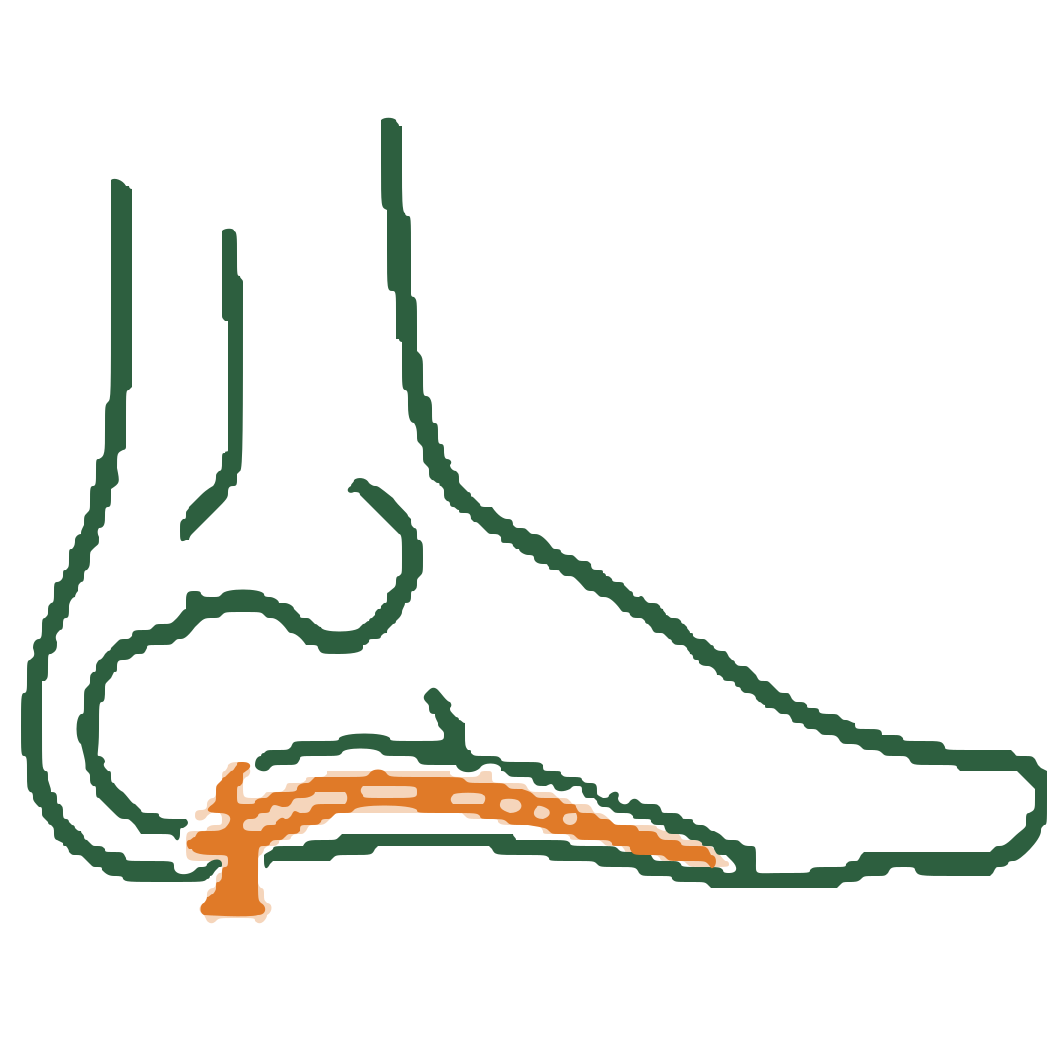
The plantar fascia is a tendon plate that attaches under the heel. Repetitive microtrauma — repeated small injuries that do not heal sufficiently — causes degeneration of the tendon tissue. In the long term this will lead to pain complaints.
Treatment options
There are many conservative (non-surgical) treatments that can provide pain relief for chronic plantar fasciitis or heel spurs. Research shows a variety of treatments: rest, physiotherapy, stretching, arch supports, night splints, anti-inflammatory medication and surgery. Nearly all patients respond to conservative, nonsurgical treatment. For a small minority, surgery is the last resort after all other treatments have failed.
Injection with an anti-inflammatory
One of the treatment options that we offer in our practice is an injection with an anti-inflammatory (corticosteroid) to reduce the pain and inflammation of the tendon. This injection generally works well and provides relief from the complaints for a while.
If the injection works well, it can be repeated. However, caution is required here. Because the pain is masked, patients can often function a lot better: walking further and longer, running more easily. The quality of the tendon is still not optimal at that time. There is therefore a risk that the tendon will sustain further injury during the action of the anti-inflammatory, including due to overenthusiastic use. As long as the anti-inflammatory is working, running, jumping and standing on toes should be avoided as much as possible.
Prolotherapy
Prolotherapy works in a different way. It is an injection therapy in which we stimulate the body's own healing response with a series of injections of glucose (a form of sugar) to repair the affected, degenerated tendon. The cause of the tendon complaints is an inadequate healing response. To repair the tendon, we must restart that healing response.
The aim of the treatment is to improve the quality of the tendon, which will eventually reduce complaints. This requires multiple treatments and an average of a few weeks of recovery. After the complaints have subsided, all activities can be resumed without fear of an increased risk of a tendon tear.
Platelet rich plasma (PRP)
Platelet Rich Plasma (PRP) is an injection therapy in which we treat a damaged tendon or joint with a concentrate of repair cells and growth factors from your own blood. Recent research has shown that PRP helps to reduce pain complaints, with a long-lasting effect.
The theory behind PRP is that the PRP's own biological growth factors stimulate the healing process, grow new blood vessels (better blood flow), remodel the extracellular matrix (wound healing) and attract other repair cells (chemotaxis). Together this has a very beneficial effect on the health of the tendon.
Lifestyle rules
- Avoid moments that increase pressure: sprinting, jumping and standing on toes.
- Continue your daily activities during treatment with prolotherapy or PRP. Cycling, swimming and training on the elliptical are no problem. Talk to us about running.
- Stiff soles, where the foot does not bend much when rolling, are recommended: they remove as much stretch as possible from the tendon plate. Good, supportive shoes are important when running.
We often see that the calf muscles are too tight in people with complaints of a heel spur. This muscle tension puts more tension on the Achilles tendon, which in turn pulls harder on the plantar fascia: the tendon plate under the foot.
Make an appointment and we will draw up a diagnosis and a treatment plan that is adapted to your situation and your wishes.
Recognizable symptoms
- Stabbing pain under the heel when taking the first steps in the morning
- Pain under the heel when you stand up after sitting for a long time
- Limping due to the pain
- Dull pain under the heel at the end of the day
- Tight calf muscles
Scientific references (5)
- Agyekum EK, Ma K. Heel pain: A systematic review. Chin J Traumatol. 2015 Jun1;18(3):164-9. PubMed PMID: 26643244.
- Melvin TJ, Tankersley ZJ, Qazi ZN, Jasko JJ, Odono R, Shuler FD. Primary CareManagement of Plantar Fasciitis. W V Med J. 2015 Nov-Dec;111(6):28-32. PubMedPMID: 26665894.
- Ryan MB, Wong AD, Gillies JH, Wong J, Taunton JE. Sonographically guidedintratendinous injections of hyperosmolar dextrose/lidocaine: a pilot study forthe treatment of chronic plantar fasciitis. Br J Sports Med. 2009Apr;43(4):303-6. doi: 10.1136/bjsm.2008.050021. Epub 2008 Nov 19. PubMed PMID:19019908.
- Jain K, Murphy PN, Clough TM. Platelet rich plasma versus corticosteroidinjection for plantar fasciitis: A comparative study. Foot (Edinb). 2015Dec;25(4):235-7. doi: 10.1016/j.foot.2015.08.006. Epub 2015 Aug 22. PubMed PMID:26362235.
- Singh P, Madanipour S, Bhamra JS, Gill I. A systematic review and meta-analysis of platelet-rich plasma versus corticosteroid injections for plantar fasciopathy. Int Orthop. 2017 Jun;41(6):1169-1181. doi: 10.1007/s00264-017-3470-x. Epub 2017 Apr 10. Review. PubMed PMID: 28396927.