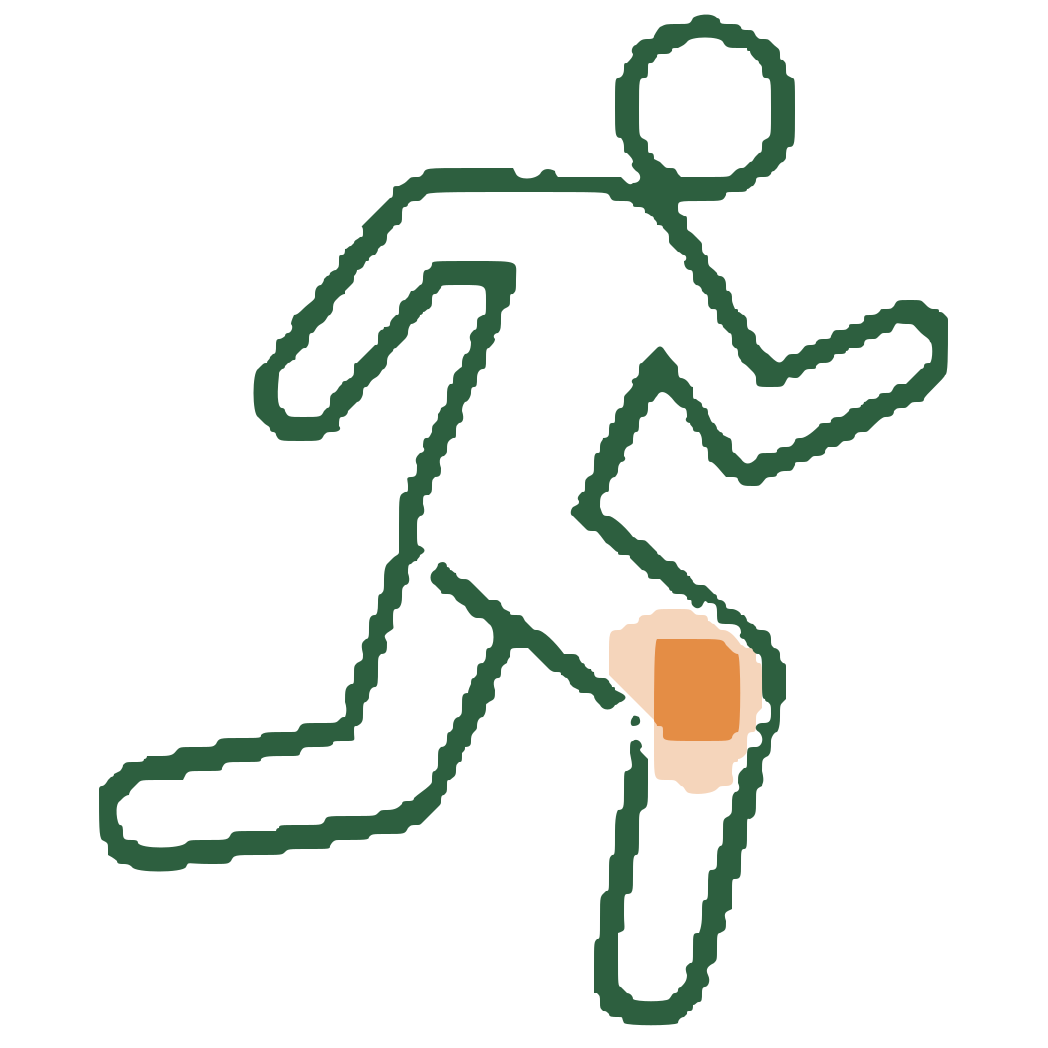
How do shin splints occur?
This ailment has several causes. Tight muscles at the back of the shin place extra strain on the muscles at the front.
Running on a hard surface or in poor shoes also increases the pulling force on the shin. When a runner runs only on the ball of the foot, without normal heel contact, the muscles of the lower leg are under strong tension. The muscles of the foot and leg also work extra hard to stabilize a pronated foot, and that load also causes a high pulling force on the shin bone.
Shin splints often occur in novice runners who have not built up their training properly, and in experienced runners who suddenly change their training schedule or running style.
Treatment
If rest or training adjustments do not help enough, further action is needed.
We treat the attachment of the muscles to the periosteum of the tibia with an injection of concentrated glucose (prolotherapy). This stimulates the body's self-healing capacity. The doctors in our practice perform this treatment in Dordrecht.
What you can do yourself
Because the complaint often arises from training too quickly, it helps to take a step back: fewer kilometers or less often, on a softer surface, and then gradually build up again. Also look at your shoes. If it does not get better despite rest, or if it hurts even if you do not exercise, have it examined.
We also look at other causal factors, such as weakness of the ankle ligaments and an imbalance in the muscle groups of the lower leg.
Recognizable symptoms
- Pain in the lower leg below the knee
- Pain around the shin
- Complaints in one leg or both legs
- Tight feeling muscles behind the shin