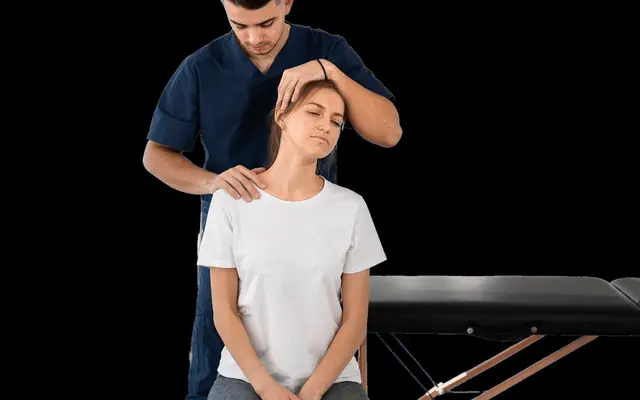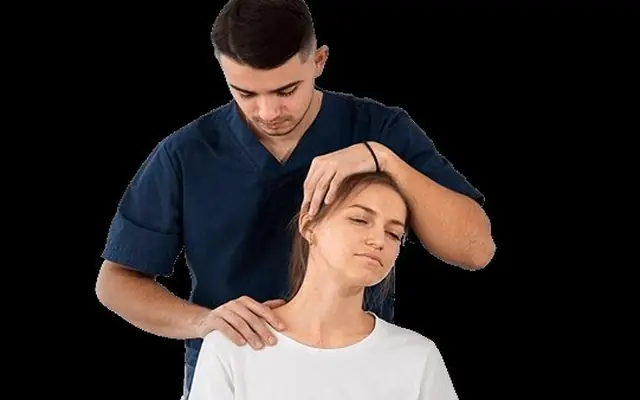
Neck complaints often arise from a combination of posture (desk work, smartphone), muscle tension and mechanical blockages in the cervical vertebrae. Whiplash is a specific form — usually after a car accident — in which the neck is suddenly overextended.
What we do
In case of acute neck pain, we start with an investigation: is there a neck hernia, wear and tear, or especially a joint blockage? We then opt for gentle chiropractic or classical manipulation, possibly supplemented with injection therapy if the pain is persistent.
With whiplash complaints — often with headaches, dizziness and concentration problems — a patient approach is crucial. We have been seeing these patients for more than 30 years and know which combination works best.
Your recovery journey
Each process is tailor-made, but this is what a typical course looks like — from first intake to pain-free. You are not committed to anything and you always know where you stand.
Acute care
Examination of movement restrictions, nerve tests, exclusion of red flags. Initial gentle mobilization for pain relief.
Inflammation & muscle spasm
2 sessions per week — combination of gentle chiropractic and muscle relaxation. You may gently practice neck rotations.
Functional recovery
We strengthen deep neck muscles. In case of whiplash with permanent instability: prolotherapy (Dordrecht, on Thursday also Rotterdam) optional.
Full return
Full work and sports load possible again. Cervicogenic headaches usually resolved.
Frequently asked questions
Is cervical manipulation safe?
Treatment of the neck can cause residual pain, and there are very rare serious complications. That is why we discuss the risks and alternatives in advance and ask your permission separately for treatment high in the neck.
How long do whiplash complaints last?
60-70% recover within 3 months; Starting treatment early improves the prognosis.
Does a cervical collar help?
No, longer than 48 hours is not recommended - it weakens neck muscles and delays recovery.
Can I work if I have neck pain?
Usually with adjustments: breaks, ergonomic screen setup, monitor at eye level.
Can a chiropractor help with tinnitus?
Sometimes, and only with one kind. If your tinnitus changes when you move or tense your neck or jaw, it is called somatosensory tinnitus; in that group treatment of the neck can reduce the complaint. The evidence for this is limited and of moderate quality, and it does not cure tinnitus. If your tinnitus has nothing to do with your neck or jaw, you are better off with an ENT specialist or an audiology centre — and we will tell you so.
What is the best pillow?
A pillow that keeps your neck in a neutral position — not too high (side sleeper) or too flat. Memory foam or neck pillows often work well.